 How-to
Get an Instant Scaffolding Quote Online: 2026 Guide
Table of Contents
- What the Instant Scaffolding Quote Tool Needs From You
- How to Calculate Scaffolding Requirements for Your Project
- What a Scaffolding Quote Includes (And What It Doesn't)
- Scaffolding Hire Duration for Renovations: What Ten Weeks Covers
- Scaffolding Highway Permit Requirements and Hidden Costs
- Insurance, Safety Compliance and Choosing a Scaffolding Provider
- Frequently Asked Questions
Last Updated: September 23, 2026
What the Instant Scaffolding Quote Tool Needs From You
Getting a scaffolding quote online takes about five minutes if you have the right details to hand. At Ironclad Scaffolding, our instant quote tool asks the questions that change the price.
Before you start, gather these details:
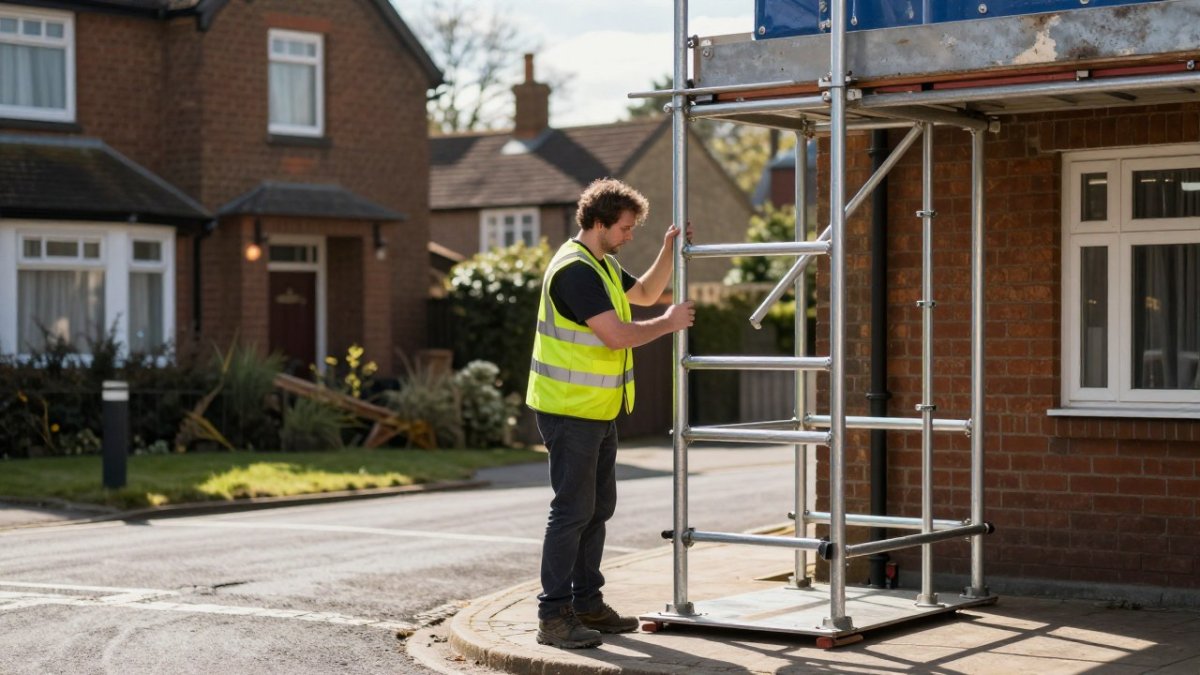
- Property type and number of storeys. A two-storey house needs a different scaffold configuration to a bungalow.
- Access notes. Where can a lorry park? Is there a driveway, a narrow lane, or a garden gate to work around?
- Working height. How high off the ground does the work actually reach?
- Project type. Roof repair, extension, render, or exterior painting all need different platform widths and boarded levels.
Property details and access notes
Access is the biggest variable in any quote. A clear driveway is quick to scaffold; a terraced house on a busy road with no off-street parking needs more planning, more labour, and often a highway permit.
Scaffold configuration and working height
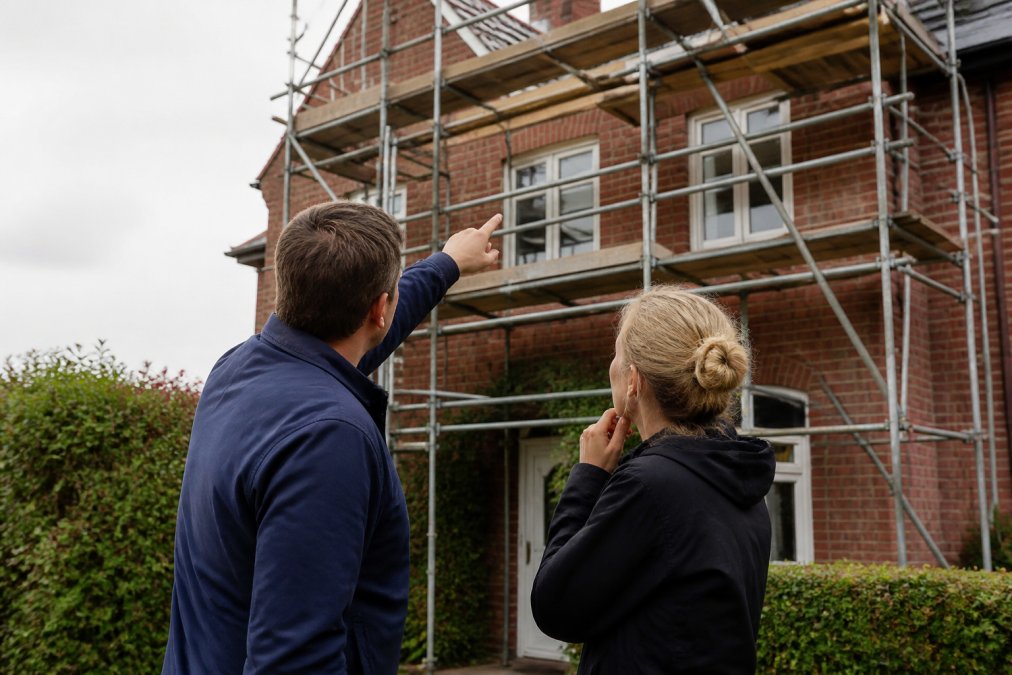
Working height is the distance from ground level to the highest point a tradesperson needs to reach safely. It decides how many lifts the scaffold needs and how wide the platform must be.
How to Calculate Scaffolding Requirements for Your Project
Calculating scaffolding requirements means matching the structure to the job, not guessing at a size. A common mistake is ordering by house height alone. The work being done matters just as much.
Work through this sequence:
- Measure the working height from ground to the highest access point.
- Identify every elevation that needs access. One wall or all four?
- Note any obstructions: bay windows, porches, downpipes, or overhead cables.
- Decide the number of boarded levels based on the trades working at height.
- Check ground conditions. Soft grass or a slope may need spreader plates.
- Confirm loading. Roof tiles and materials add weight the design must carry.
What a Scaffolding Quote Includes (And What It Doesn't)
A proper scaffolding quote lists every element of the job, not just a headline figure. The table below shows what a well-built quote covers, and the extras that turn a competitive figure into an expensive one.
| Quote Element | Typically Included | Often Excluded |
|---|---|---|
| Erection and dismantling | Yes | - |
| Delivery and collection | Yes | - |
| Hire duration | Yes, fixed period | Extra weeks beyond term |
| Highway permit | Varies by provider | Often charged separately |
| Site survey | Usually free | - |
| Scaffold design drawings | Sometimes | Complex designs |
| Insurance | Provider's public liability | Your own cover |
| Adaptations mid-project | Rarely | Almost always extra |
The hidden costs checklist
Most homeowners compare quotes on the headline number and only discover the extras when the invoice lands. Run this checklist against every quote and get a written answer on each line:
- Delivery and collection. Some providers fold this into the hire rate; others charge it twice. Ask whether it is a flat fee or priced by distance and load size.
- Hire duration overrun. A quote built on four weeks looks cheaper than one built on ten, until your roof repair overruns and you pay weekly rental rates on top. Ask for the weekly overrun rate in writing.
- Highway permit and licence fees. The permit carries a council fee, and some providers add an administration charge. Ask who pays the council directly and whether any handling fee is included.
- Traffic management. If the scaffold narrows a road or blocks a lane, you may need cones, signs, or temporary traffic lights, almost never in the headline figure.
- Parking bay suspensions. Removing resident parking bays usually carries its own charge, levied by the council and passed on to you.
- Scaffold design and drawings. Straightforward domestic elevations are usually covered. Complex designs, curved walls, unusual loading, or structures over a public footpath, often attract a separate fee.
- Inspection and handover certificates. The provider's own inspection regime should be included, but if you need a formal handover certificate for building control or insurance, confirm whether that is part of the package.
- Adaptations mid-project. Adding a lift, extending a platform, or altering the structure after erection is almost always chargeable, and the rate is rarely published up front.
- Protection and sheeting. Debris netting, brick guards, and weather sheeting are sometimes quoted as optional extras rather than standard.
- Reinstatement. Any damage to the pavement or verge during the hire period is normally your responsibility to put right.
What 'included' should actually mean
A quote that says 'scaffolding included' tells you almost nothing. One that says 'erection, dismantling, delivery, collection, ten weeks' hire, highway licence fee paid to the council, and weekly overrun at a stated rate' tells you everything you need to compare like for like.
When you compare two quotes, put the overrun rate next to the headline price. A quote that is £200 cheaper but charges a higher weekly overrun can cost more than the 'expensive' one on any project that slips by a fortnight.
Where the money actually goes
On a typical domestic job, the visible costs, tubes, boards, and fittings, are only part of the picture. Labour, transport, the hire period, and the admin behind a highway licence all sit inside the figure. That is why two providers quoting the 'same' scaffold can differ by hundreds of pounds: they are pricing different assumptions about access, duration, and who carries the permit risk.
Scaffolding Hire Duration for Renovations: What Ten Weeks Covers
Ten weeks of scaffolding hire covers the vast majority of domestic renovation projects, from a straightforward roof repair to a full extension. That's why every Ironclad Scaffolding package includes ten weeks as standard, not as an upsell.
Here's what that window realistically covers:
- Roof repairs and replacements: typically two to four weeks of active work.
- Chimney work and repointing: one to three weeks.
- Single-storey extensions: six to ten weeks, including brickwork, roof, and finishing.
- Full exterior painting and render: three to six weeks depending on weather.
- Window replacement across a property: two to five weeks.
Scaffolding Highway Permit Requirements and Hidden Costs
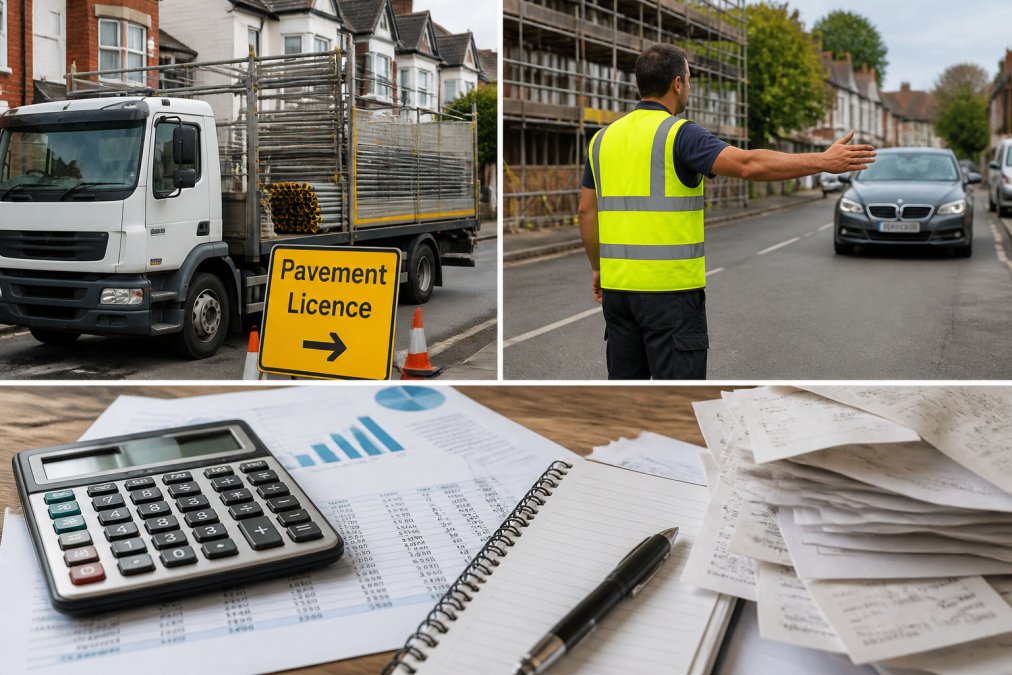
A highway permit, often called a pavement licence or scaffold licence, is required whenever scaffolding stands on a public road, pavement, or verge (Scaffolding and hoarding licence (England and Wales)). The local authority must usually approve it before the structure goes up, and the application takes time. This is the section most quote tools skip, and where the real cost surprises live.
What the permit fee is actually made of
There is no single national figure, because each local authority sets its own charges under its own highway legislation. But the fee is rarely one line, it is usually built from several components, and knowing them lets you interrogate a quote properly:
- The licence fee itself. The core charge for occupying the highway. Councils commonly price it by the week, by the metre occupied, or by a flat rate per structure, and some apply a minimum charge.
- A refundable deposit. Many authorities ask for a deposit against damage to the pavement, verge, or street furniture, returned after the scaffold comes down and the highway is inspected, provided nothing needs reinstating.
- An administration or application fee. Some councils separate the processing cost from the licence fee, so the total is higher than the headline rate suggests.
- Renewal or extension charges. If the project runs past the permit period, you pay again to extend it. The renewal fee is sometimes the same as the original, sometimes lower, it depends entirely on the authority.
- Parking bay suspension charges. If the scaffold needs a resident bay or a loading bay suspended, that is usually a separate charge on top of the licence.
- Traffic management costs. If the scaffold narrows a road or blocks a lane, you may need cones, signs, or even temporary traffic lights. These are arranged separately and are not part of the licence fee.
Who applies, and who holds the licence
The licence is normally applied for by whoever erects the scaffold, because the authority needs a competent person to take responsibility for the structure and its occupation of the highway. The provider usually applies in their own name, pays the fee, and either includes it in the quote or passes it through at cost.
Ask your provider who holds the licence. When Ironclad Scaffolding handles the highway licence for you, the administrative back-and-forth with the council sits with us, not you. That means one less thing to chase while your project is underway.
Timing: why the permit drives the schedule
Permit processing is not instant. Depending on the authority and complexity, approval can take days rather than hours, and applications involving traffic management or a bus route take longer still. If your project has a fixed start date, a roofer booked, a delivery scheduled, the permit application needs to be in well before the scaffold goes up.
The hidden costs checklist for permits
Before you accept any quote that involves standing on public highway, confirm each of these in writing:
- The licence fee, and whether it is included or passed through at cost.
- Whether a deposit is required, how much it is, and when it is returned.
- Any administration or application fee charged by the council or the provider.
- The permit period, and the cost of extending it if the project overruns.
- Whether parking bay suspension is needed, and who pays for it.
- Whether traffic management, cones, signs, lights, is required, and who arranges it.
- Who is responsible for reinstating any damage to the pavement or verge.
A quote that mentions 'permit extra' without a figure is not a quote, it is an estimate with an open end. Ask for the council's published fee schedule to be attached, or for the provider to state the maximum they expect the permit to cost.
Insurance, Safety Compliance and Choosing a Scaffolding Provider
Insurance and safety compliance are non-negotiable, and the first things to check before you book anyone. A cheap quote from an uninsured provider is the most expensive quote you'll ever accept.
Ask every provider for three things:
- Public liability insurance covering the work on your property, with a certificate you can actually read.
- Evidence of training. Scaffolders should hold current competency cards for the type of structure they're erecting.
- A written inspection regime. Scaffolds must be inspected before first use, then at regular intervals and after any alteration or high winds.
The best scaffolding quote isn't the cheapest one. It's the one that includes the permit, a realistic hire period, and a named person accountable for safety compliance.
Frequently Asked Questions
What information do I need to get an accurate scaffolding quote?
You will need your property address and postcode, the number of storeys, the type of work planned, and any access restrictions such as driveways, hedges or narrow lanes. Photos of the elevation help too. With these details, an instant scaffolding quote tool can size the structure and price the job without a site visit. Ironclad Scaffolding reviews every submission and can confirm a written quote within 24 hours.
Does an instant scaffolding quote online include highway licensing fees?
It should, provided the quote is generated after checking whether the scaffold touches public highway. Ironclad Scaffolding handles the highway licence application as part of the package, so the fee and administration are built into your written quote rather than added later. If your local authority rejects the application, Ironclad works with you on alternatives such as repositioning the scaffold or adjusting the design.
How long does scaffolding hire usually last for home renovations?
Most residential roof repairs and exterior painting jobs need the scaffold for four to eight weeks. Ironclad Scaffolding includes ten weeks of hire in every package, which covers typical renovation timelines without extra weekly charges. If your project runs longer, additional weeks are charged at the agreed weekly rate stated in your quote, so there are no surprises.
Can I get a 3D visual of my scaffolding before booking?
Yes. Ironclad Scaffolding offers a 3D scaffold viewer that shows how the structure will sit against your property, including boarded levels, access points and the footprint on your driveway or garden. This helps you check that the design matches your expectations before you commit. If the 3D view does not reflect your property accurately, the team will revise the design before issuing the final written quote.