 How-to
How to Hire Scaffolding for Solar Panel Installation in 7 Steps
Last Updated: November 21, 2026
Quick Summary
Scaffolding is not always required for solar panel installation, but the installer must manage the risks of working at height. Ask your installer to explain their access method before you book scaffolding hire, since ladders, mobile platforms or roof-edge protection may be used instead.
- Ask your installer in writing which access method they will use before booking.
- Sunsave gives a typical range of £700 to £2,000 for solar panel scaffolding.
- Ironclad Scaffolding includes ten weeks of hire; extra weeks are charged separately.
- Confirm who is responsible for the scaffold structure, its inspections and its insurance before work starts.
- Apply for a highway licence early if any part of the scaffold stands on the public highway.
Table of Contents
- Do You Need Scaffolding for Solar Panel Installation?
- Solar Panel Scaffolding Cost in the UK
- How Long Scaffolding Is Needed for Solar Panels
- Scaffolding Safety for Solar Panel Installation
- Step-by-Step: How to Arrange Scaffold Hire
- Getting a Scaffolding Quote for Solar Panels
- Booking Your Scaffolding for Your Solar Installation
- Frequently Asked Questions
Do You Need Scaffolding for Solar Panel Installation?
Scaffolding is not automatically required for every solar panel installation, but the installer must manage the risks of working at height. A5G Access notes that suitable measures must be taken whatever method is used, so the real question is how the installer will keep people and materials safe on the roof.
Other jobs may be done from a ladder, a mobile access platform or a roof-edge protection system, depending on the roof pitch, height and access. The right answer depends on the property, so ask your installer to explain their method before you book any scaffolding hire.
Watch out: Do not agree to work at height from a ladder without asking how the installer will protect the roof edge and any materials they carry up.
Solar Panel Scaffolding Cost in the UK
Price is the first thing most homeowners want to know. Sunsave's guide to scaffolding for solar panels gives a typical range of £700 to £2,000 for solar panel scaffolding, though that figure does not state the hire period or what is included. A separate Get Free Quote solar-panel scaffolding cost guide suggests around £500 to £1,200 as a planning allowance for most domestic installations, with higher-cost jobs reaching £1,500 to £2,000 or more.
Several factors move the price up or down:
- Height and number of storeys
- Roof pitch and how far the scaffold must reach
- Front and rear access, and whether the scaffold must cross a pavement
- Whether a highway licence is needed
- Hire length and any extension charges
The cost depends on the size of the house, the access and the dates. Visit the Ironclad Scaffolding website for current prices or a quote, and ask for a written quote that lists each of these items so you can compare like with like.
The article gives these cost factors and figures for solar panel scaffolding in the UK.
| Item | Value | Note |
|---|---|---|
| Sunsave typical range | £700 to £2,000 | Hire period not stated |
| Get Free Quote planning allowance | £500 to £1,200 | Most domestic installations |
| Higher-cost jobs | £1,500 to £2,000+ | Larger or more complex jobs |
| Ironclad hire included | Ten weeks | Extra weeks charged separately |
| Height and storeys | Price factor | Moves price up or down |
| Front and rear access | Price factor | Pavement crossing may add cost |
| Highway licence | Price factor | Needed in some cases |
How Long Scaffolding Is Needed for Solar Panels
The hire period should cover the installation, the testing and the dismantling. Scaffolding is commonly hired for a few weeks, although the exact length depends on the size of the array and the weather. Ironclad Scaffolding includes ten weeks of hire in every package.
If the job runs longer than the agreed hire period, extra weeks are charged separately, so ask for the weekly rate in writing. Ask for that weekly rate in writing before you sign, so the cost of an overrun is clear from the start.
Scaffolding Safety for Solar Panel Installation
Safety on a solar installation is not just the scaffolder's concern. Three parties share responsibility, and understanding who owns what prevents the most common disputes.
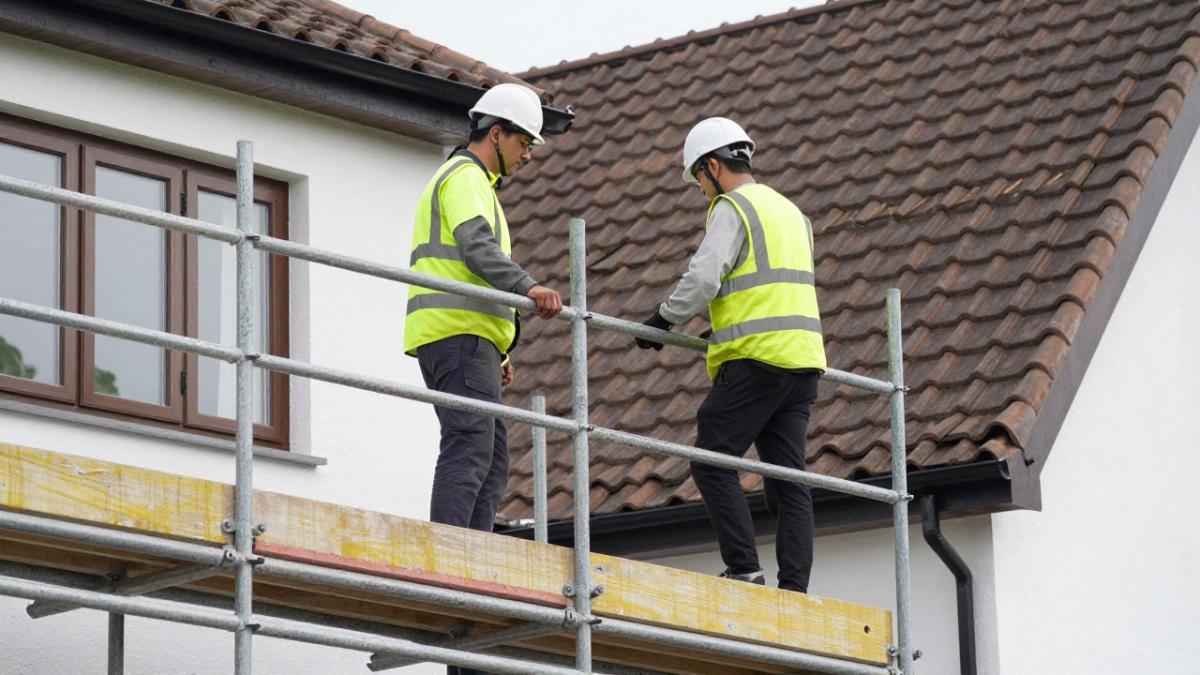
The regulatory baseline. Work at height in the UK is governed by the Work at Height Regulations 2005, and the Construction (Design and Management) Regulations 2015 may apply to some projects (The law). Check with the relevant authority or your installer for how these rules apply to your job.
Who is responsible for what:
- The scaffolder designs the structure, erects it with trained operatives (typically holding a CISRS card), ties it to the building, fits guardrails and toe boards, and provides the handover certificate. The scaffolder also carries out the statutory inspections.
- The installer plans the roof work, produces the risk assessment and method statement, ensures operatives are competent, and controls the handling and lifting of panels. The installer should not alter the scaffold, if a tie or guardrail needs moving, the scaffolder returns to do it.
- The homeowner provides accurate information about the property, confirms boundaries and access, and does not interfere with the scaffold. If you employ the scaffolder directly, confirm insurance and competence before work starts.
Inspection requirements. Ask the scaffolder how inspections will be handled across the hire period, especially if the scaffold stands for several weeks, and confirm that a record is available on site.
What to check before work starts:
- Confirm that the scaffolder holds public liability insurance and can produce a certificate.
- Guardrails, toe boards and brick guards are fitted on every working platform.
- The scaffold is tied to the building at the designed intervals, not merely resting against it.
- Ladder access is internal or otherwise protected, with a gate or barrier at the top.
- The handover certificate and inspection record are on site.
- The installer's method statement names the scaffold as the access method.
Panel handling and lifting. Solar panels are large, heavy and easily damaged. Confirm how panels will be lifted to the roof, usually by a hoist or a gin wheel fixed to the scaffold, or by hand from a protected platform. Panels should never be carried up a ladder.
Watch out: A common mistake is to assume the installer's insurance covers the scaffold structure. It usually does not. Confirm in writing who is responsible for the scaffold, who inspects it, and who insures it before the first panel goes up.
Step-by-Step: How to Arrange Scaffold Hire
Most guides stop at "get a quote and book it". The practical sequence below is what actually determines whether the scaffold arrives on the right day, at the right size, with the right paperwork. Work through it in order and you avoid the two most common failures: a scaffold that is too short for the array, and a hire period that expires before the installer has finished.
- Confirm the access method with your installer first. Ask your solar installer, in writing, whether they need a full scaffold, a scaffold tower, a mobile elevating work platform or roof-edge protection. Their method statement and risk assessment should name the access equipment. Do not order a scaffold until the installer has confirmed the type and the elevations they need.
- Carry out a pre-survey of the property. Note the number of storeys, the roof pitch, which roof faces carry panels, and any obstacles: conservatories, extensions, dormers, soil pipes, satellite dishes, sloping ground, narrow side returns and shared boundaries. Photograph each elevation. This information lets the scaffolder quote accurately rather than pricing a generic box.
- Book a site survey with the scaffolder. A competent contractor will want to visit before confirming a price, particularly where there is a conservatory, a glass canopy or restricted side access. The survey confirms the scaffold design, the base position, the tie-in points and whether the structure will stand on private ground or the public highway. Ask for the survey findings in writing.
- Establish whether a highway licence is needed. If any part of the scaffold, including the base plates, standards or a protective fan, will stand on the public highway, footway or verge, you will usually need a licence from the local highway authority under the Highways Act 1980. The authority will ask for a plan, public liability insurance and a proposed duration. Apply early: licence processing can take days or weeks depending on the council, and the scaffold cannot legally be erected on the highway until the licence is granted. Confirm in writing who is applying, you or the scaffolder.
- Request written quotes on a like-for-like basis. Ask every scaffolder to quote for the same specification: elevations covered, scaffold type, hire period, erection, dismantling, ties, netting or fans, highway licence fee, and the weekly extension rate. A cheap quote that excludes the licence or the dismantle is not a cheap quote.
- Coordinate dates with the installer and the scaffolder together. Give both parties the same target installation date. The scaffold should be erected and handed over at least one working day before the installers arrive, so any snagging, a missing toe board, a tie that needs adjusting, can be fixed without delaying the panel delivery. Agree the dismantling date only after the installer confirms the commissioning and sign-off date.
- Inspect the handover before anyone works from it. On the day of erection, walk the scaffold with the scaffolder. Check guardrails, toe boards, ties, base plates, ladder access and the presence of a current inspection tag. Confirm the scaffold is complete before the installers begin.
- Confirm dismantling and site clearance in writing. The job is not finished when the panels are on. Agree who removes the scaffold, when, and how the ground is reinstated. Keep the handover certificate, licence confirmation, insurance certificate and final invoice together until the scaffold has gone.
Watch out: If you book the scaffold before the installer has confirmed the access method, you can end up paying for a structure the installer will not use, or for a taller, wider scaffold than the job needs.
Getting a Scaffolding Quote for Solar Panels
A good quote should be in writing and should list every cost. Ironclad Scaffolding offers instant quotes and a 3D scaffold viewer for visualising the project before you commit.
When you compare quotes, look for:
- Hire period and weekly extension rate
- Highway licence costs, if they apply
- Delivery, erection and dismantling charges
- Insurance and the scaffolder's qualifications
- Whether the quote is a firm written price or an estimate
Ironclad Scaffolding provides written quotes within 24 hours. Use the same checklist for every quote so the comparison stays fair.
Booking Your Scaffolding for Your Solar Installation
Once you have a quote you are happy with, confirm the booking in writing and agree the dates with your installer. Ask for the scaffold to be erected a day or two before the panels arrive, so the installers can start straight away.
Before work begins, check that the scaffold is complete, the guardrails are in place and the access route is clear.
We recommend keeping the written quote, the licence confirmation and the insurance certificate together until the job is finished. That paperwork protects you if anything changes during the project.
Planning a solar installation in Kent? Ironclad Scaffolding offers instant quotes, a 3D scaffold viewer and highway licence handling, with ten weeks of hire included in every package. Request your quote today and see the scaffold on your home before you book.
Frequently Asked Questions
Do you need scaffolding to install solar panels?
Not always. Scaffolding is the most common way to give installers safe access to a roof, but suitable alternatives such as mobile access platforms may be used depending on the property, the roof height and the work involved. A5G Access notes that scaffolding is not automatically required for every installation, but that suitable measures must be taken to manage the risks of working at height. Ask your installer how they plan to access the roof and what fall-prevention measures they will use before you agree the job.
How much does scaffolding hire for solar panel installation cost?
Pricing depends on the property, the scaffold configuration, the hire period and access conditions. Visit the Ironclad Scaffolding website for current prices or a quote, and ask for a written quote that sets out exactly what the price covers.
How long is scaffolding usually needed for solar panel installation?
The required hire period depends on the size of the array, the number of installers, weather and how complex the roof is. Ironclad Scaffolding includes ten weeks of hire in every package, . If your installation or related roof work runs longer, ask about extending the hire and check how any extra weeks are charged in your quote. Check the hire terms before you book so you know how delays are handled.
Does scaffolding hire include installation and dismantling?
This depends on the package and the provider, so confirm it in writing before you book. Check in writing whether erection, dismantling, highway licences, additional supports or safety netting are included in your quote. Ironclad Scaffolding handles highway licensing as part of its service. Ask for a written quote that lists erection, dismantling, hire weeks and any extras.