 How-to
How to Compare Scaffolding Company Quotes Like for Like
Last Updated: November 17, 2026
Quick Summary
To learn how to compare scaffolding company quotes, first confirm each one covers the same scaffold type, height, elevations and hire period. Then check that erection, dismantling, delivery, licences, insurance, VAT and extension rates are stated for every quote, so the totals can be compared like for like.
- Quotes differ mainly by scaffold type, hire period and extras, so confirm these match first.
- A complete quote should list erection, dismantling, hire period, delivery, licence, insurance and VAT.
- Compare deposits as a percentage of the total, not just the headline figure.
- Ironclad Scaffolding includes ten weeks of hire, so compare extension rates after that period.
- Use a written specification and send the same one to every company before comparing prices.
Table of Contents
- Why Scaffolding Quotes Vary So Much
- What Should a Scaffolding Quote Include
- Matching the Scope and Type of Scaffold
- Scaffolding Hire Period and Extension Costs
- Questions to Ask a Scaffolding Company
- Scaffolding Quote Comparison Checklist
- Booking Your Scaffold Once the Quote Checks Out
- Frequently Asked Questions
Why Scaffolding Quotes Vary So Much
Two scaffolding quotes for the same house can differ noticeably, and knowing how to compare scaffolding company quotes properly matters more than picking the cheaper figure. Many readers also wonder whether instant scaffolding quotes are accurate, so it is worth checking that before relying on one. Scaffolding is priced by the scope, the duration and the access conditions, and each company builds those assumptions differently. Before you compare totals, you need to understand what sits behind each number.
Most differences come from three places: the scaffold type, the hire period and the extras. A quote for a single-storey rear extension will look nothing like one for a full roof replacement on a semi-detached house. Even two quotes for identical jobs can differ because one company has included delivery and the other has left it out.
A common mistake is comparing the headline price without checking the assumptions beneath it. Pricing for any job depends on the scaffold size, how long you need it, and the site conditions, so ask any provider for a written breakdown rather than relying on a single figure.
What Should a Scaffolding Quote Include
A complete scaffolding quote should state what is supplied, for how long, what happens if the job runs over, and who is responsible for what. Without those four things, you cannot tell whether two prices are comparable.
Check that the quote lists these items, and ask for each one in writing rather than accepting a verbal assurance:
- The scaffold type and the area it covers, such as the elevations and the height
- Erection and dismantling, shown as separate lines
- The hire period and the weekly rate after that period
- Delivery and collection charges
- Any highway or pavement licence, and who arranges it and pays for it
- The scaffold's safety documentation, such as the inspection and handover paperwork
- Public liability and employer's liability insurance, with the certificate available on request
- VAT, shown clearly as a separate amount
- Payment terms, including any deposit and the stage at which the balance falls due
- Cancellation terms and what happens if the start date slips
Ironclad Scaffolding includes ten weeks of hire in every package and handles the highway licence, so those costs should appear as line items rather than hidden in the total.
Safety documentation and responsibility boundaries. A quote should say who provides the risk assessment and method statement, who carries out the statutory inspections, and who signs the handover certificate when the scaffold is ready for use.
Insurance and credentials. Ask for the public liability insurance certificate and check the level of cover and the expiry date. Confirm that the scaffolders hold the relevant competence cards for the type of scaffold being erected (Scaffolds). A quote that says only 'fully insured' without a certificate is not verification.
Payment terms and deposits. Compare deposits as a percentage of the total, not just the headline figure. A 25% deposit on a £2,000 quote is £500; the same percentage on a £3,500 quote is £875. Check whether the balance is due on erection, on dismantling, or on a fixed date, and whether late payment attracts interest.
Watch out: a quote that shows only a total, with no breakdown, makes it impossible to see what you are paying for. Ask for the line items before you accept it, and keep the written quote and any variations in one file so you can compare them later.
Matching the Scope and Type of Scaffold
Learning how to compare scaffolding company quotes starts with one rule: compare quotes only when they describe the same scaffold for the same work. A tower scaffold for internal decorating is not comparable with a full-height facade scaffold for roof repairs, even if both are called "scaffolding" in the quote.
Start by confirming the scaffold type. Common types for residential work include:
- Independent scaffolds, which stand alone and suit most house exteriors
- Putlog or system scaffolds, often used for longer or more complex builds
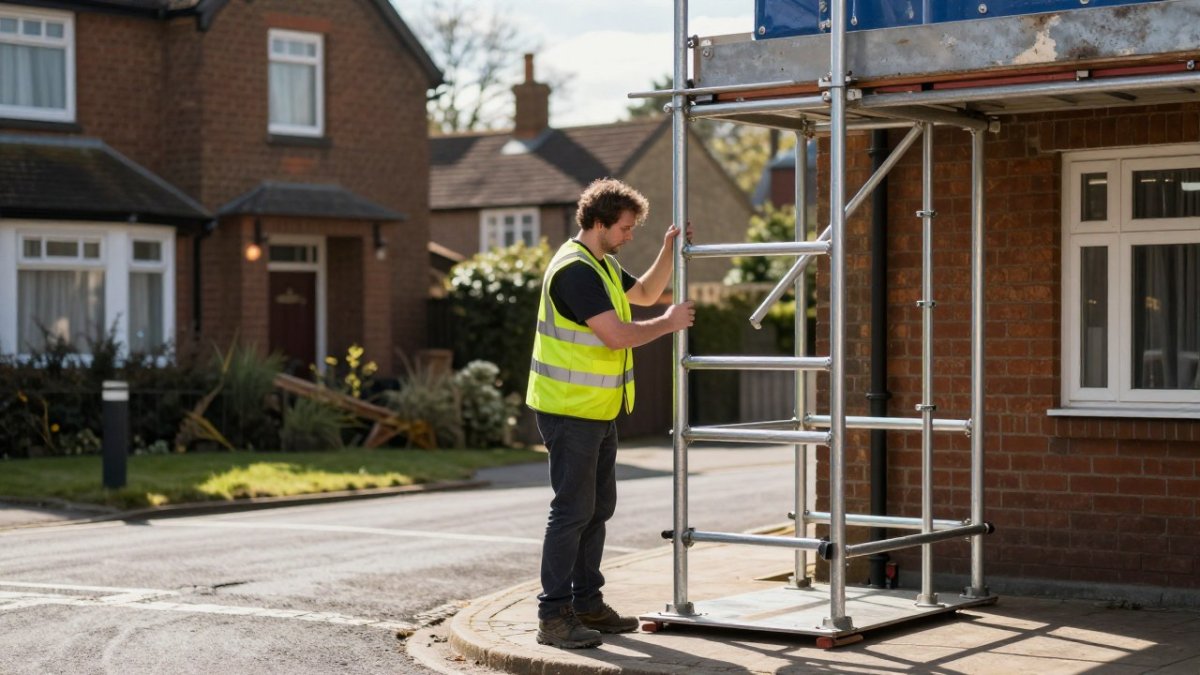
- Mobile towers, used for shorter internal or external tasks
Then check the scope. Note the height, the number of elevations covered, and whether the scaffold needs to wrap around corners. A quote that covers only the front of a house will be cheaper than one covering all four sides, and that difference is not a saving if you still need the rear.
A practical approach is to write down your own specification before requesting quotes. List the job, the building height, the elevations, the expected duration and any access restrictions. Send the same specification to every company. This is the easiest way to make the quotes like for like.
Scaffolding Hire Period and Extension Costs
The hire period is the figure most likely to change the final bill, so check it closely. A quote usually covers a fixed hire period, and any time beyond that is charged separately.
Ironclad Scaffolding's packages include ten weeks of hire. If your project may overrun that period, ask each company for its extension rate in writing. Compare the weekly figure after the included period, not only the headline price.
Many businesses find that a short delay costs far more than the planned hire, because the scaffold stays up while work is paused. Ask how the company charges for extensions and whether it offers any notice before extra weeks are added. Qualified guidance is enough here: the exact cost depends on your scaffold size and the provider's rates, so get that figure in writing.
The hire period and extension rate are the figures most likely to change the final bill, so compare them side by side.
| Item | Value | Note |
|---|---|---|
| Included hire period | Ten weeks | Ironclad Scaffolding packages |
| Extension cost | Weekly rate after included period | Ask each company for it in writing |
| Deposit example | 25% of £2,000 = £500 | Compare deposits as a percentage |
| Deposit example | 25% of £3,500 = £875 | Same percentage, higher total |
Questions to Ask a Scaffolding Company
Asking the right questions before you accept a quote saves disputes later. The answers should be written in the quote or confirmed by email, and you should record them against each quote so the comparison is evidence-based rather than a memory test.
Useful questions include:
- Does the price include erection, dismantling and delivery?
- Who applies for any highway or pavement licence, and what happens if it is refused?
- What is the weekly rate after the included hire period?
- Are the scaffolders trained and insured for this type of work, and can you see the certificates?
- How soon can the scaffold go up, and how long does the quote remain valid?
- Is VAT included, and is it shown separately?
- What documentation is provided at handover, and who signs it?
- What are the payment terms, deposit and cancellation charges?
- Who is responsible for inspections during the hire period?
If a company hesitates to answer any of these, treat that as a warning sign. A reliable provider should be able to answer each question without delay.
A worked like-for-like comparison. Suppose you receive two quotes for the same job. Each quote may state a different headline price, hire period, extension rate, delivery charge and licence arrangement.
Once each quote's assumptions are exposed, the cheaper headline price is not always the cheaper total. This is why the questions above matter: they turn a headline figure into a comparable total. Build the same sum for every quote you receive, using the extension rate, the licence cost and the delivery charge each company states.
Project-specific access and design considerations. For complex jobs, add questions about uneven ground, roof type, public access, loading bays and multiple trades needing the scaffold at once. A quote that assumes level ground may need adjustment if the site slopes, and a scaffold shared by several trades may need a longer hire period or additional loading bays. Ask each company how it has allowed for these in its price.
Watch out: if a company will not put its extension rate, licence responsibility and inspection arrangements in writing, you cannot compare its quote fairly.
Scaffolding Quote Comparison Checklist
Use this checklist to set quotes side by side. Work through each quote and tick off the items it covers. Any box left empty shows a gap you need to ask about.
- Scaffold type and dimensions match your specification
- Number of elevations and height are the same
- Erection and dismantling are listed separately
- Included hire period is stated, with the extension rate
- Delivery and collection are included or priced separately
- Highway or pavement licence is included, with responsibility stated
- Safety documentation is mentioned
- VAT is shown separately
- Quote validity date is given
- Payment terms and any deposit are stated
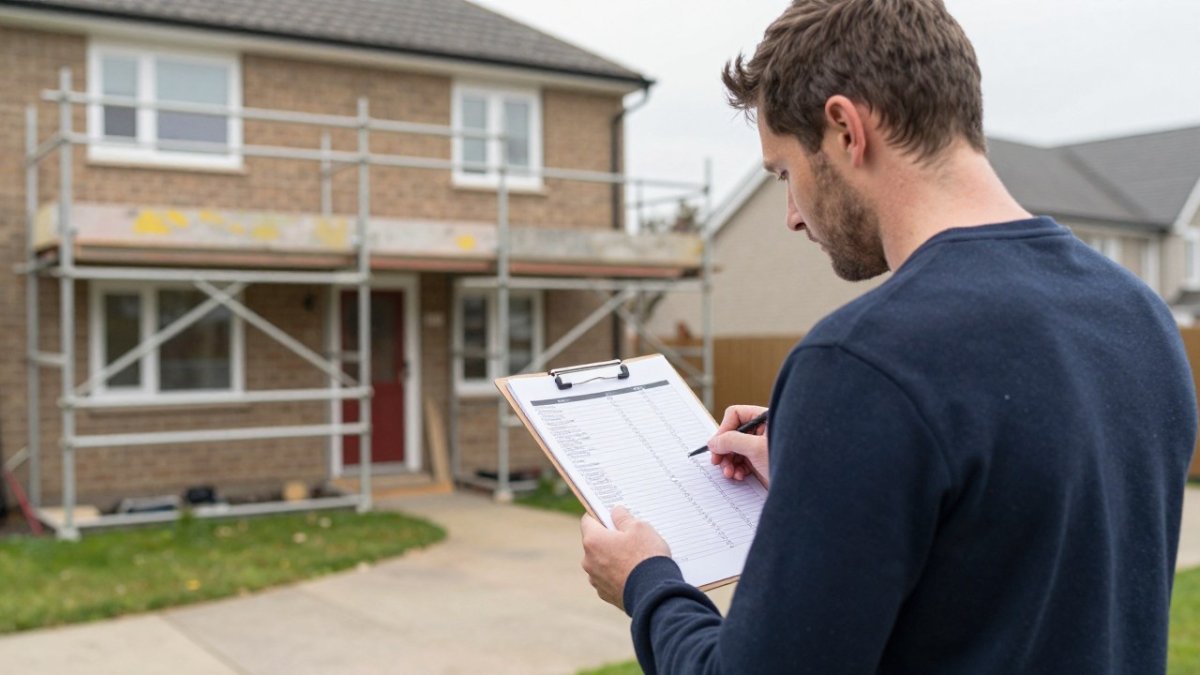
Print the checklist and fill it in for each quote. Once the boxes are compared, the cheapest total is often not the cheapest scaffold.
!A homeowner in a driveway reviewing printed scaffolding quotes on a clipboard beside a partly erected scaffold on a house
Booking Your Scaffold Once the Quote Checks Out
Once one quote matches your specification and answers your questions, you can book. Confirm the start date, the included hire period and the handover arrangements in writing before work begins.
Ironclad Scaffolding offers instant scaffold quotes and a 3D scaffold viewer to help you plan your project. You can request a scaffolding quote online and compare it with the checklist above.
For a full breakdown of what a standard rental covers, read what is included in scaffolding rental. If you are weighing the cost of a longer job, the residential hire cost breakdown explains how hire periods and extensions add up, and how excess week charges are calculated sets out what happens if the work overruns.
Quick answer: Compare scaffolding quotes by matching the scaffold type, scope, hire period and extras line by line, then check the written breakdown rather than the total price.
Frequently Asked Questions
What should a scaffolding quote include?
A scaffolding quote should state the scaffold type and size, the hire period and weekly rate, the cost of erection and dismantling, delivery, and any charges for extensions. It should also say whether highway or pavement licence fees are included, what access requirements apply, and whether VAT is added. Ask for the quote in writing so you can compare it line by line with other providers. Any item left out should be flagged as an exclusion so you know what you may be asked to pay later.
Does a scaffolding quote include the full hire period?
Not always. Some quotes cover a fixed number of weeks, while others price the first period and charge a weekly rate after that. Check exactly how many weeks are included and what the weekly charge is once that period ends. If your roof repair or extension could run longer than planned, ask for the extension rate in writing before you accept, so the cost of overruns is clear from the start.
Can scaffolding companies charge extra if a project runs over?
Yes, if the contract allows it. Most providers charge a weekly extension rate once the included hire period ends, and some add charges for delays caused by weather, access problems or changes to the scope of work. Ask for these rates in writing and check whether the provider needs your approval before extending the hire. Knowing the weekly figure lets you estimate the cost of a delay before it happens.
How do I compare scaffolding quotes like for like?
Start by confirming that each quote covers the same scaffold type, height, length, working platform, hire period and access arrangements. Then list every line item, including erection, dismantling, delivery, extensions, licences and VAT, in the same order for each quote. Totals alone can hide differences, so a quote that looks cheaper may exclude items another quote includes. Once the lines match, the price difference is easier to judge.