 how-to
Scaffolding for Roof Repair: A Step-by-Step Guide
Table of Contents
- Why Scaffolding Matters for Roof Repair Work
- Step 1: Assess Your Roof Repair Requirements
- Step 2: Get a Written Quote and Visualise Your Project
- How Long Can You Hire Scaffolding For
- Understanding Roof Repair Scaffolding Cost
- Scaffolding Safety Checks for Homeowners
- Scaffolding Licence for Pavement: What You Need to Know
- Step 3: Prepare Your Property and Confirm Installation Dates
- Frequently Asked Questions
Last Updated: October 11, 2026
Why Scaffolding Matters for Roof Repair Work
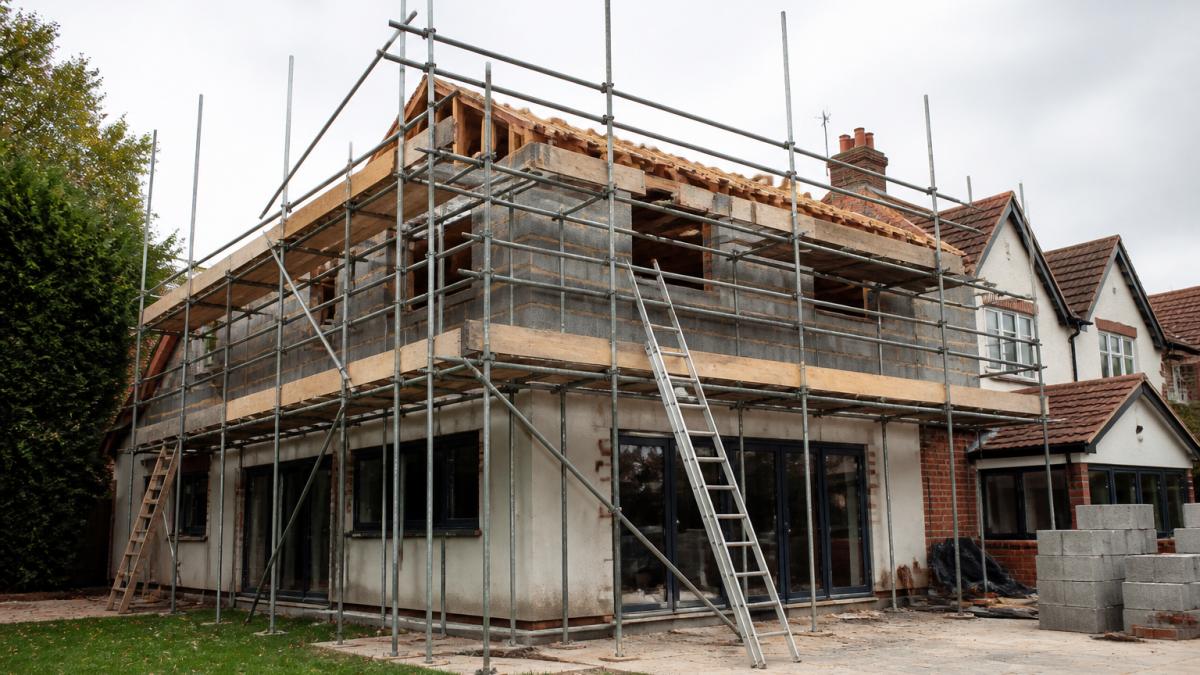
Scaffolding roof repair in Kent provides safe, stable access to your property's exterior, protecting both workers and your home. Without it, roof repairs become hazardous, workers face falls, and projects stall. At Ironclad Scaffolding, we provide tailored solutions to help homeowners complete repairs safely and efficiently.
Proper scaffolding transforms a dangerous task into a controlled operation, holding tools, materials, and workers securely while protecting your gutters, gardens, and surroundings. Whether addressing a gutter leak or full roof replacement, scaffolding is the foundation of safe, compliant work.
Step 1: Assess Your Roof Repair Requirements
Understanding your repair needs determines the exact scaffolding configuration required. Identify the work type, access areas, and site constraints (ground space, building proximity, weather exposure). This assessment drives the quote, timeline, cost, and safety approach.
Pitched and sloped roof access
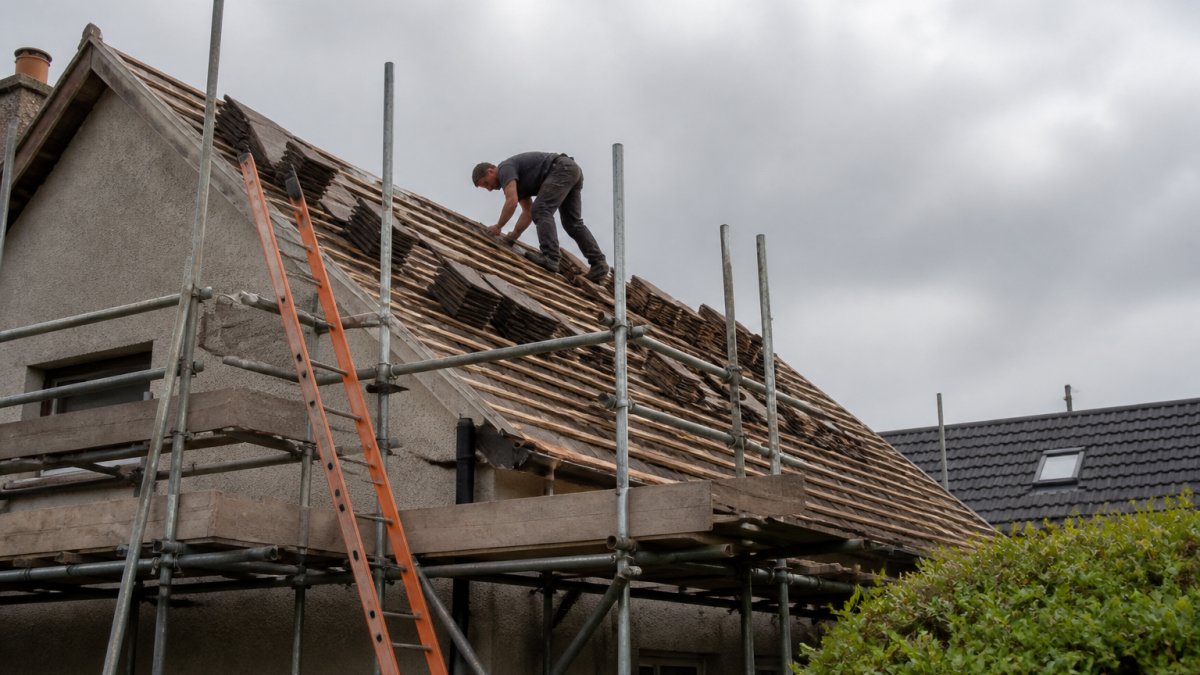
Pitched roofs demand specialized scaffolding because workers cannot safely stand on angled surfaces. Scaffolding for roof repair must provide a horizontal working platform away from the slope for safe access to gutters, tiles, flashing, ridge work, and chimneys.
Steeper pitches demand more complex designs. Scaffolders assess roof angle to determine platform height, outreach, and bracing for stability and compliance with the Work at Height Regulations 2005.
Gutter repair and maintenance access
Gutter cleaning, repair, and replacement are the most common roof-adjacent work requiring scaffolding. Ladders cannot safely support extended work; scaffolding provides a stable platform where workers move freely, use both hands, and store tools securely.
Gutter access scaffolding typically sits 3-6 metres high and must meet all safety standards. Platform width and height depend on gutter run length, simultaneous roof-edge access needs, and soffit or fascia repair scope.
Choosing the right scaffold type for your repair
Different repair scenarios suit different scaffold configurations:
Independent scaffolds are freestanding structures ideal for most residential roof repairs. They offer flexibility for different roof shapes and easy adjustment if scope changes. They require 1-2 metres ground space and solid, level ground. Cost is moderate with straightforward erection.
Cantilever scaffolds attach to your building using internal anchors. They suit narrow passages, sloped ground, or limited ground space. They require structural assessment (adding engineering cost and timeline) but save space for terraced properties or restricted-access buildings.
Mobile elevated work platforms (MEWPs) or cherry pickers are wheeled hydraulic platforms ideal for small, localized repairs like a single chimney. They're quick to position and cost-effective for short-duration, single-area work but unsuitable for extensive repairs or work lasting more than a few days.
Temporary roof systems (protective coverings) protect the work area from rain, wind, and debris, preventing weather delays and shielding your property from falling materials. They cost £800-£2,000 but are valuable for winter repairs, extensive work, or exposed locations, reducing timeline uncertainty.
Site constraints and access assessment
Before requesting a quote, note site constraints: ground conditions (level, sloped, soft, or hard-standing), building proximity to fences or trees, utility locations (power lines, pipes, drainage), weather exposure, and access routes. Provide this information to help scaffolders design the right setup and avoid surprises.
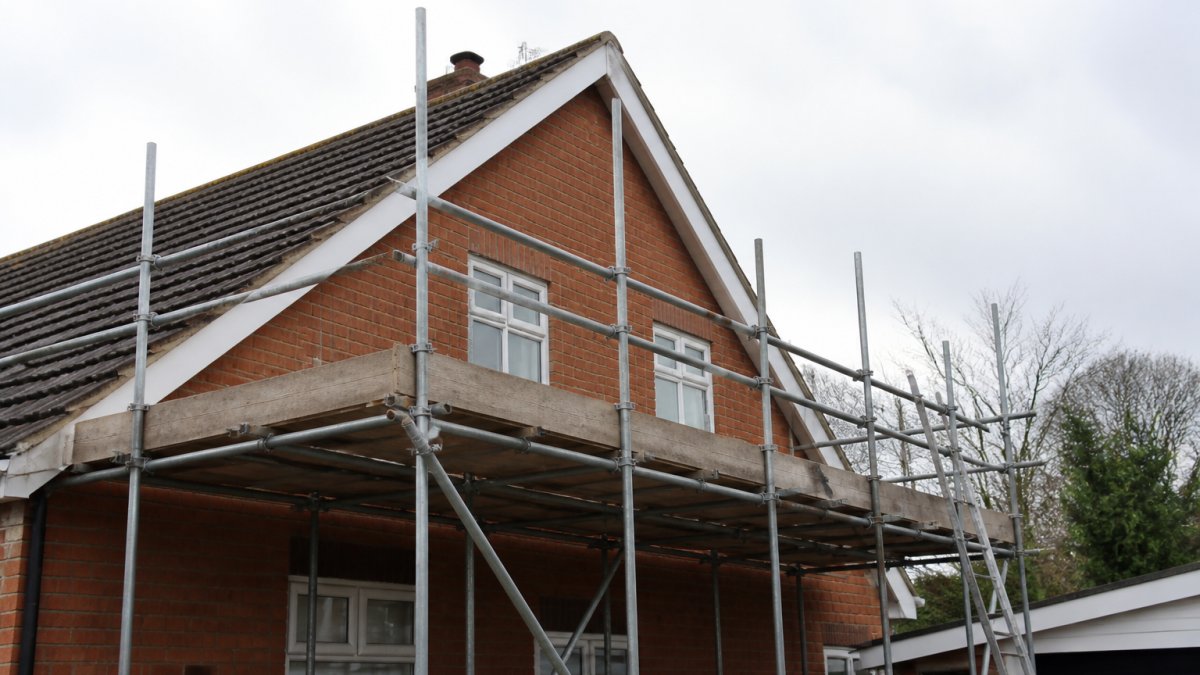
Step 2: Get a Written Quote and Visualise Your Project
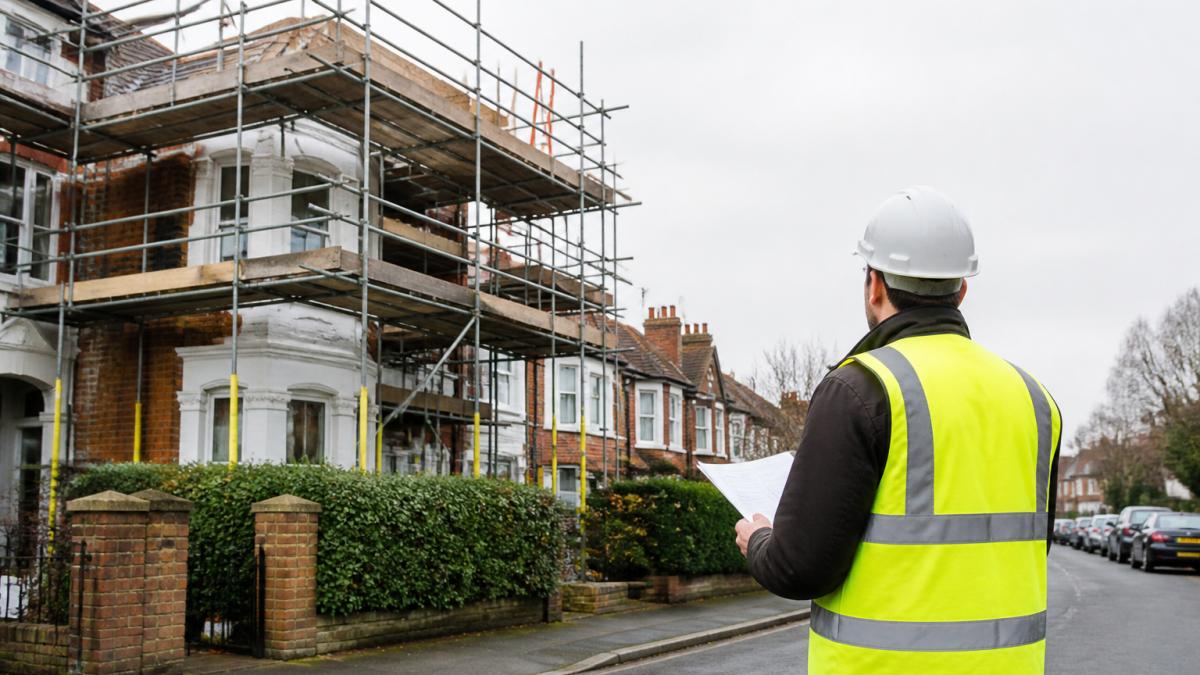
Request detailed quotes from multiple providers breaking down costs by component: platform configuration, safety equipment, installation labour, hire duration, and additional services. Ironclad Scaffolding provides written quotes within 24 hours with a 3D scaffold viewer to visualize the setup before installation.
When comparing quotes, verify each specifies the same scope: platform dimensions, access points, railings, bracing, and weather protection. Cheaper quotes often omit critical safety components. Transparent providers itemize every element.
How Long Can You Hire Scaffolding For
Hire duration directly impacts your project timeline and budget. Most roof repairs complete within 2-6 weeks, but some projects require longer access. Understanding your realistic timeline prevents unexpected extension charges.
Ironclad Scaffolding includes ten weeks of hire in every package, providing flexibility for repairs that take longer than expected. If your project finishes faster, you're not penalized, you keep the full ten weeks. This built-in buffer removes the stress of rushing completion or facing surprise costs for overtime hire.
When planning your hire duration, account for weather delays, material delivery timing, and any unexpected issues the contractor discovers once work begins. A realistic timeline prevents the frustration of scaffolding being dismantled before repairs finish.
Understanding Roof Repair Scaffolding Cost
Scaffolding roof repair costs depend on several factors: your roof size, pitch angle, complexity of access, hire duration, and whether highway licensing is required. Rather than guessing at typical prices, understanding the cost drivers helps you evaluate quotes fairly and anticipate where expenses will cluster.
Platform configuration and complexity
A simple single-level independent scaffold with basic railings costs less than a multi-level setup with outreach bracing, cantilever arms, or temporary roof systems. Independent scaffolds (freestanding structures that do not rely on your building for support) are standard for most roof repairs and offer good value. Cantilever scaffolds, which attach to your building's structure, suit narrow access areas or where ground space is limited but require more engineering. Temporary roof systems, protective coverings that shield the work area and your property from weather, prevent weather delays and reduce project timeline uncertainty.
Roof pitch and access difficulty
Your roof angle directly affects scaffolding design complexity and material requirements. A gentle 20-30-degree pitch requires standard horizontal platforms and basic bracing. A steep 45-50-degree pitch demands additional diagonal bracing, wider platforms for stability, and sometimes specialist design input. Difficult access, such as properties on slopes, with narrow side passages, or surrounded by mature trees, requires more labour for positioning and may necessitate specialist equipment like mobile elevated work platforms (MEWPs) for initial setup.
Hire duration and weekly rates
Most roof repairs complete within 2-6 weeks. Hire duration is typically charged as a weekly rate, with discounts for longer bookings.
Highway licensing and permits
When scaffolding occupies public pavement or road space, you must obtain a licence from your local council. Licence applications typically take 2-4 weeks to process. Your scaffolding provider usually handles the application, submitting structural drawings, insurance certificates, and safety documentation. Some providers include licensing in their quote; others charge it separately. Confirm whether licensing is included before comparing quotes.
Material and labour variables
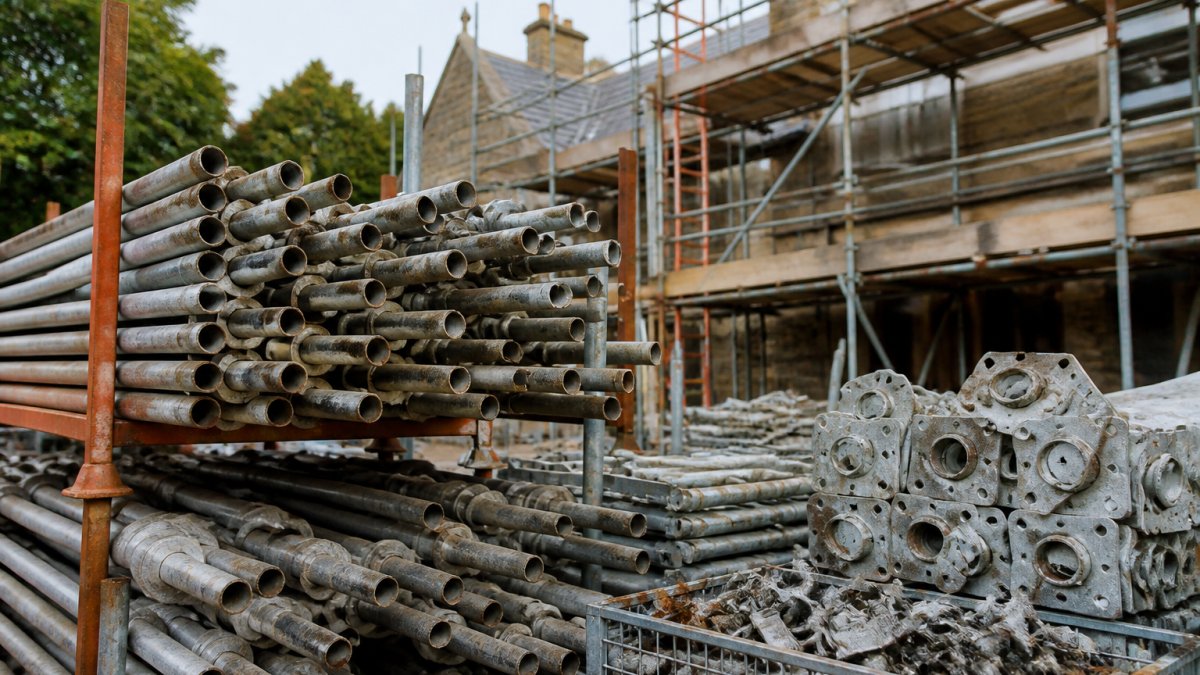
Scaffolding material costs fluctuate with steel prices and supplier availability. Labour costs depend on your location within the region, site accessibility, and whether erection requires specialist skills (such as working at height on steep pitches or in confined spaces). Urban areas typically have lower labour costs due to higher competition; rural or remote locations may incur travel surcharges. Weather conditions also affect labour: erecting scaffolding in winter or during wet periods may take longer and cost more.
Transparent pricing checklist
When requesting quotes, ask providers to itemize the following:
- Platform configuration (dimensions, type, outreach distance)
- Base plates, feet, and ground preparation
- Railings, toe boards, and bracing
- Installation labour (hours and rate)
- Weekly hire rate and total duration
- Dismantling and removal labour
- Highway licence (if applicable) and cost
- Weather protection or temporary roof (if included)
- Public liability insurance certificate
- Any additional charges (site access, utility marking, specialist design)
Providers offering transparent, itemized quotes allow you to compare apples-to-apples and identify where cost differences genuinely reflect scope changes versus hidden fees.
Scaffolding Safety Checks for Homeowners
Your responsibility as a property owner includes verifying that scaffolding meets safety standards before work begins. A few simple checks protect your workers, your property, and your liability.
Inspect the base before any worker climbs the structure. Scaffolding must sit on level, stable ground with proper weight distribution. Uneven or soft ground can cause settling and instability.
Examine railings, toe boards, and bracing for damage or loose connections. All guardrails must be at least 1100mm high, with mid-rails at approximately 550mm. Toe boards prevent tools and materials from falling.
Verify that the provider has valid public liability insurance and that their workers wear appropriate safety equipment: harnesses, helmets, and high-visibility clothing. Ask to see certificates of competence for the scaffolders erecting the structure.
Scaffolding Licence for Pavement: What You Need to Know
When scaffolding occupies public pavement or highway space, you need a licence from your local council. This legal requirement protects pedestrians and ensures the structure meets public safety standards. The licence process takes 2-4 weeks, so plan accordingly.
Your scaffolding provider typically handles licence applications on your behalf, submitting detailed plans and insurance documentation to the council. The application includes structural drawings, safety certifications, and proof of public liability insurance. Councils review applications to ensure the structure won't obstruct pedestrian access or create safety hazards.
Ironclad Scaffolding manages the entire licensing process as part of our service, removing this administrative burden from you. We handle council correspondence, submit required documentation, and notify you once approval is confirmed. This simplified approach prevents delays and ensures compliance with local regulations.
Step 3: Prepare Your Property and Confirm Installation Dates
Preparation before installation day ensures smooth setup and prevents delays. Clear the area where scaffolding will be erected: remove garden furniture, potted plants, bins, and parked vehicles. Provide the scaffolders with access to water if they need to clean the base area or prepare ground.
Confirm access routes into your property and to the work area. Mark any underground utilities, gas, water, electricity, drainage, so the installation team avoids damaging them while positioning base plates.
Communicate your preferred installation date and confirm the team will arrive as scheduled. Clarify parking arrangements for the scaffolding vehicle and confirm that no other work will disrupt the installation. Once scaffolding is erected, verify it matches the quote specifications: platform height, width, configuration, and safety railings.
Frequently Asked Questions
Do I need a licence if scaffolding is placed on a public pavement?
Yes. Scaffolding that extends onto a public pavement requires a scaffolding licence (also called a licence for works). Your scaffolding provider should handle this application with the local authority. The licence protects public safety and ensures the scaffold meets regulations. Without it, you risk fines and work stoppages. Ironclad Scaffolding includes highway licence management in every package, so you don't need to manage this yourself.
How long can you hire scaffolding for residential roof repair?
Most providers, including Ironclad Scaffolding, include a standard hire period, typically ten weeks, in their package price. If your roof repair extends beyond that timeframe, additional weeks are charged at a weekly rate. Weather delays, material shortages, or complex repairs can extend timelines. Discuss your estimated project duration with your provider upfront so you understand what's included and what costs extra after the initial period.
What safety checks should I do before scaffolding is erected at my home?
Before erection, check that your property access is clear of obstacles, overhead power lines are identified, and the ground is level and stable. Once erected, inspect the scaffold for secure railings, proper bracing, and secure attachment to your building. Your scaffolding provider should provide a safety certificate and explain any weight limits. Never allow work to begin on unstable or incomplete scaffolding. Ask your provider for their insurance and training credentials.
What does scaffolding for roof repair typically cost?
Costs depend on roof size, scaffold height, duration of hire, site access, and whether a pavement licence is needed. Rather than guessing, request an instant quote from Ironclad Scaffolding based on your property details and project scope. This gives you transparent pricing tied to your specific requirements. Pricing typically includes erection, dismantling, and a set hire period, with additional weeks charged separately.
Roof repairs demand safe, reliable access. Scaffolding for roof repair transforms a risky task into a controlled, professional operation. Ironclad Scaffolding provides instant quotes, 3D visualization, and complete administrative handling, including highway licensing, so you can focus on completing your repairs safely. Get a written quote within 24 hours and see exactly how scaffolding will look on your property before installation begins.