 How-to
What Happens If the Council Rejects Your Scaffolding?
Last Updated: November 7, 2026
Quick Summary
A council rejection means you cannot put scaffolding on the public highway until the issues are fixed and a new application is approved. A refusal is rarely final, so read the refusal notice, fix the specific problem and resubmit your scaffolding licence application.
- The most common refusal cause is an application that never shows the scaffold on a plan.
- Read the refusal letter twice and ask the named officer what single change would make it acceptable.
- Resubmitting identical drawings with a new date is not a revised application and may be refused again.
- Erecting the scaffold while a review is pending counts as unauthorised scaffolding and can trigger enforcement.
- A scaffolding licence covers the public highway only, so neighbour consent is a separate permission.
Table of Contents
- What a Council Rejection Actually Means for Your Project
- Scaffolding Licence Application Requirements Before You Apply
- Why a Council May Refuse Permission and What They Assess
- What to Do When Your Scaffolding Licence Is Refused
- How to Mount a Scaffolding Licence Appeal
- How Long Does a Scaffolding Licence Take and What Delays to Expect
- Council Permission vs Neighbour Consent: Two Separate Battles
- Get Your Licence Handled Before You Book
- Frequently Asked Questions
What a Council Rejection Actually Means for Your Project
A council rejection means you cannot put scaffolding on the public highway until the issues are fixed and a new application is approved.
A refusal is a decision on a specific application, not a ban on your building work.
Most refusals fall into two buckets:
- Fixable: missing paperwork, wrong dimensions, unclear traffic plans
- Structural: the proposed position blocks a footway, junction or access point
The first type is a delay. The second needs a new approach, often a different scaffold position or a temporary footway closure.
Scaffolding Licence Application Requirements Before You Apply
A scaffolding licence is formal permission from the local highway authority to place a structure on or over a public road, footway or verge (Scaffolding and hoarding licence (England and Wales)). It is separate from planning permission and separate from building regulations approval (Difference between Building Control and Planning).
Watch out: the most common refusal cause is an application that describes the scaffold in words but never shows it on a plan.
If you want the full sequence laid out step by step, our guide to the scaffolding permit process for homeowners walks through each stage.
Why a Council May Refuse Permission and What They Assess
Highway officers generally assess whether the public can still move safely past a property.
Highway and Pedestrian Safety Concerns
A footway generally needs to stay passable for wheelchairs, prams and mobility scooters, and narrowing it can lead to refusal or a closure requirement.
Other common safety triggers: scaffold within a junction visibility zone; structure overhanging a bus stop or crossing; no lighting plan for a structure left up over winter; loose boards or netting that could catch wind.
Incomplete or Incorrect Applications
Paperwork failures are the easiest refusals to overturn. Typical examples: wrong property boundary on the plan, dates clashing with a roadworks embargo, an expired or missing insurance certificate, or the applicant named as the homeowner when the licence must sit with the contractor.
A refusal letter usually names the specific failing. Read it twice before reacting.
What to Do When Your Scaffolding Licence Is Refused
A refusal is not the end of the road, but the first 48 hours matter. Work through this sequence in order.
Step 1: Read the refusal notice properly
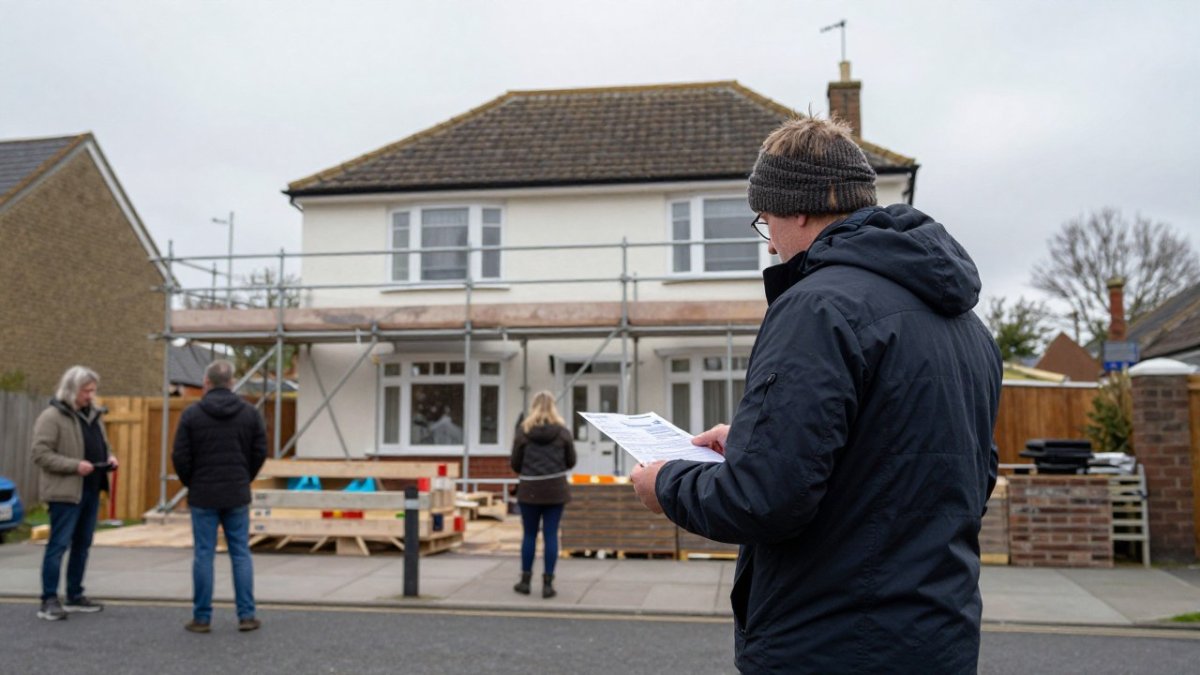
Read the letter twice. Most refusal notices state the specific reason or reasons for refusal, the application reference number, the deciding officer, any review or complaints procedure, and a date by which you can respond or request a review.
If the letter is vague, phone the highway office and ask for the named officer. Ask one question: "What single change would make this application acceptable?" Write down the answer.
Step 2: Categorise the refusal
Refusals generally fall into three types, and each needs a different response:
| Refusal type | Typical wording | What to do |
|---|---|---|
| Procedural | "Insufficient information", "drawings not to scale", "insurance certificate missing" | Fix the paperwork and resubmit. This is usually the quickest route. |
| Technical | "Pedestrian clearance below minimum width", "structure conflicts with junction visibility" | Ask your scaffolder to redesign the layout or propose a footway closure with diversion. |
| Policy or site-specific | "Roadworks embargo in place", "no suitable position exists" | This is the hardest to overturn. Consider timing, alternative access, or a different method of work. |
Knowing which type you face stops you wasting time on the wrong remedy. Resubmitting identical drawings after a technical refusal will simply produce a second refusal.
Step 3: Decide who resubmits
If your scaffolder applied, they should lead the resubmission. If you applied as the homeowner, check whether the council requires the licence to sit with the contractor, many authorities insist the licence holder is the party carrying out the work. Getting this wrong is a common cause of procedural refusal.
Step 4: Fix the application before you resubmit
Use this checklist to address the most common refusal triggers:
- Redraw the site plan so the highway boundary is clearly marked
- Show the scaffold to scale, including width, height and distance from the kerb
- Confirm pedestrian clearance meets the council's minimum
Watch out: resubmitting the same drawings with a new date is not a revised application. Officers will recognise it and may refuse again without reassessing the merits.
Step 5: Ask about a pre-application conversation
Some highway authorities may offer a short pre-application call or meeting. Ask before you resubmit, a ten-minute conversation can save a two-week round trip. If no formal route exists, a phone call to the highway office is still worth making.
Step 6: Know when to stop pushing
If the council's objection is that no safe position exists for a scaffold on the highway, further applications may not help. In that case, ask your scaffolder about alternatives: a different scaffold system, a tower scaffold within the property boundary, or a method of work that avoids the highway altogether.
Who to contact
- The highway authority (usually the county council or unitary authority) for the licence decision
- The named officer on the refusal letter for clarification
- Your scaffolder for revised drawings and technical input
If you are unsure whether permission was needed in the first place, our explainer on whether you need council permission for scaffolding sets out the baseline rules.
How to Mount a Scaffolding Licence Appeal
The route for challenging a scaffolding licence refusal depends on the kind of decision being challenged.
First, distinguish the decision type
Before you appeal anything, confirm what was actually refused:
- A highway licence (scaffolding licence), permission to place a structure on or over a public road, footway or verge. This is an operational decision by a highway officer.
- Planning permission, consent for the building work itself, with a formal appeal route to the Planning Inspectorate.
- Building regulations approval, separate again, and not something a highway officer decides.
If your letter is about the scaffolding licence, the routes below apply. If it is a planning refusal, a statutory right of appeal may exist, with deadlines stated on the decision notice. Do not confuse the two.
Route 1: Request a senior officer review
This is the most common first step. Write to the highway authority, quote the application reference, and ask for the decision to be reviewed by a senior officer.
The refusal letter may state a deadline for requesting a review. Check the letter and act promptly.
Route 2: Resubmit a revised application
This is not technically an appeal, but it is the route that succeeds most often. A new application with revised drawings, adjusted dates and a point-by-point covering letter gives the officer a fresh decision to make. It also resets the determination period, so factor in the council's quoted turnaround (often several weeks).
Route 3: Use the council's corporate complaints process
If you believe the decision was made without proper consideration, was discriminatory, or failed to follow the council's own published policy, you can escalate through the council's complaints procedure. This is not a planning appeal; it is a corporate complaint. It will not usually overturn a technical judgement, but it can prompt a review if procedure was flawed.
What about the Local Government and Social Care Ombudsman?
If the council's complaints process is exhausted and you believe there was maladministration (for example, the council lost your application, failed to follow its own policy, or took unreasonably long), you can complain to the Local Government and Social Care Ombudsman. It will not usually overturn a decision simply because you disagree with it, but it can recommend that the council reconsider.
Deadlines and what to check
Practical deadlines to check:
- The refusal letter may state a review window
- The council's complaints process usually has a time limit
- The Ombudsman generally expects complaints to be made within a set time of becoming aware of the issue
Watch out: erecting the scaffold while a review or complaint is pending counts as unauthorised scaffolding. That can trigger enforcement action, including removal at your cost. Do not start work until you have written approval.
What success looks like
A successful review or resubmission results in a revised licence decision, sometimes with conditions (for example, a shorter hire period or a requirement for a footway closure).
If you are weighing up whether to appeal or redesign, our guide to scaffolding licence management for extensions explains how to keep the project moving while the paperwork is resolved.
How Long Does a Scaffolding Licence Take and What Delays to Expect
Turnaround times for scaffolding licences vary by council and workload. A refusal resets the clock.
Submitting a complete application the first time helps avoid delays.
If your work is urgent, say so in the application and ask whether the council can prioritise essential repairs. Some will, some will not.
Council Permission vs Neighbour Consent: Two Separate Battles
A scaffolding licence covers the public highway. It does nothing about private land.
A tenant needs the landlord's permission. A shared access road may need consent from several owners.
Here is the practical distinction:
| Issue | Council Permission | Neighbour Consent |
|---|---|---|
| Public footway or road | Required | Not relevant |
| Private driveway | Not relevant | Required |
| Overhanging a boundary | Sometimes | Required |
| Access to erect | Not covered | Required |
| Enforcement if ignored | Council action | Civil dispute |
A council approval will not save you from a boundary dispute. Get both in writing before the first pole goes up.
Get Your Licence Handled Before You Book
The gap between a good scaffolding job and a stressful one is usually administration, not engineering.
At Ironclad Scaffolding, we handle the highway licence as part of the package.
Before you commit to any provider, it pays to know how to compare scaffolding quotes effectively so you are judging like for like. If you are still shortlisting, you can also find local scaffolding companies and get instant online quotes to see what is available in your area.
A refused licence stalls your repair, your extension and your budget.
A refused application is a setback, not a dead end.
Frequently Asked Questions
Can a council refuse a scaffolding licence?
Yes. A council can refuse a scaffolding licence if the application is incomplete, if the structure would block a public highway or pavement unsafely, if pedestrian or traffic management plans are inadequate, or if the proposed structure conflicts with other street uses. Councils assess public safety, access and highway impact before granting permission. If you are refused, you receive written notice with reasons, which you can use to fix the application or appeal.
What should I do if my scaffolding application is rejected?
Read the refusal notice carefully and note the specific reasons given. Contact your scaffolder to discuss amendments, such as changing the structure's footprint, adding traffic management, or adjusting the timing. You can then resubmit a corrected application or use the council's formal review or appeal route. Keep all correspondence in writing. Acting quickly matters because delays can push back roof repairs or renovation work that depends on safe exterior access.
Can I put scaffolding on private land if the council refuses permission?
Sometimes, but it depends on the land. If you can erect scaffolding entirely within your own property boundary without touching the public highway, you may not need a highway licence at all. However, if the structure needs to sit on a neighbour's land, you must get their consent separately. Council permission and neighbour consent are different things. Check your deeds and discuss access rights with your neighbour before assuming private land is available.
Who is responsible for applying for a scaffolding licence?
The scaffolding contractor usually applies for the highway licence on the homeowner's behalf, because they know the structure specifications and safety requirements. However, the homeowner remains responsible for ensuring the licence is in place before work starts. Confirm in writing who is handling the application and what happens if it is refused. Some providers, including Ironclad Scaffolding, manage the highway licensing process as part of their service.