 blog
Is Professional Scaffolding Worth It for Painting?
Last Updated: November 22, 2026
Quick Summary
Professional scaffolding is worth it for most two-storey exterior painting jobs: it removes ladder repositioning, keeps both hands free for a steady finish, and eliminates the fall risk of sustained ladder work. It is worth it when work is above first-floor level, runs along more than a small section of wall, or takes longer than a day.
- A professional team typically needs half a day to erect and half a day to dismantle a domestic painting scaffold.
- Anything above roughly 3.5 metres puts you into fall-risk territory where a ladder is the wrong tool.
- Ironclad Scaffolding packages include ten weeks of hire and written quotes within 24 hours.
- A DIY scaffold tower costs £150-£400 to hire but leaves you the competence and inspection duty.
- Compare the total cost for your expected duration, not the headline weekly rate.
Table of Contents
- Scaffolding vs Ladder for Exterior Painting: The Real Trade-Off
- Scaffolding Hire Cost for House Painting: What Drives the Price
- How Long to Hire Scaffolding for Painting
- Safety, Fall Prevention and Working at Height Rules
- Getting a Domestic Scaffolding Quote: What to Check
- When Professional Scaffolding Is Worth It: A Decision Framework
- Book Your Scaffolding Assessment
- Frequently Asked Questions
Scaffolding vs Ladder for Exterior Painting: The Real Trade-Off
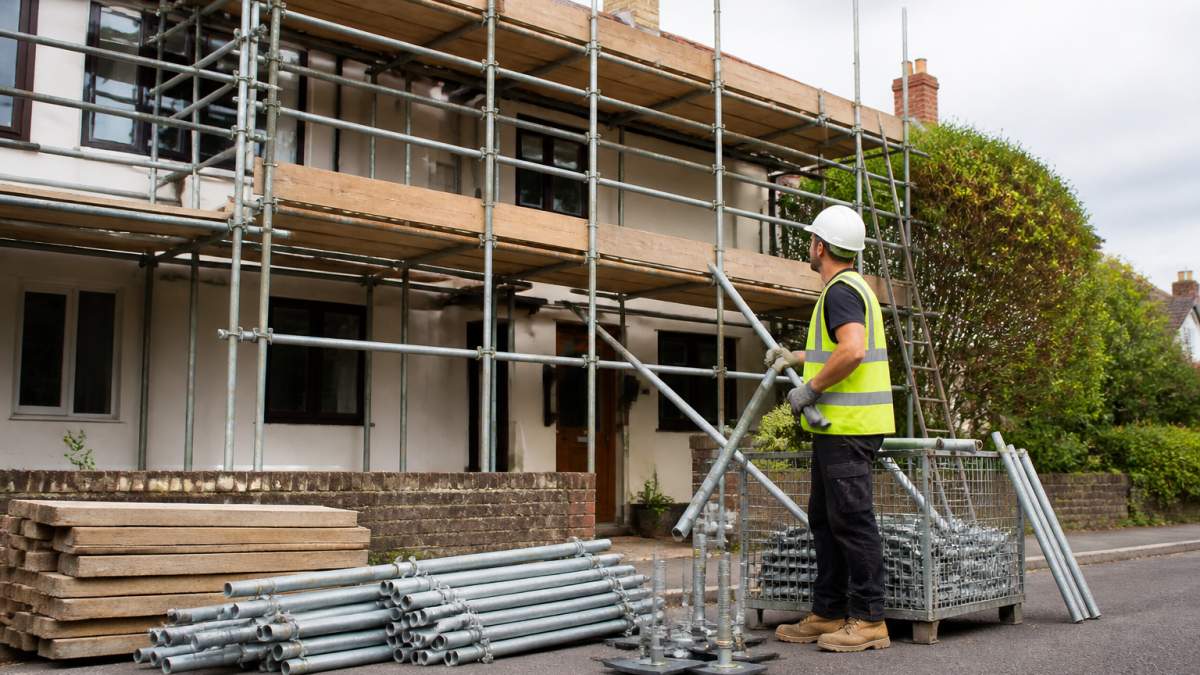
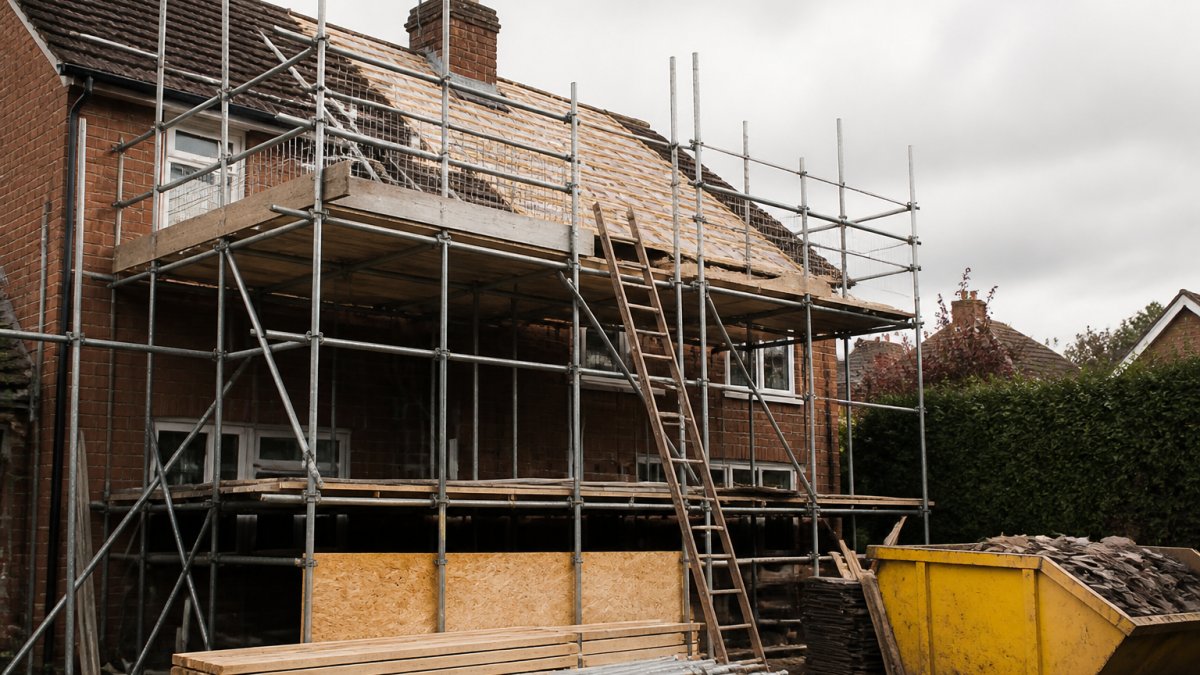
Is professional scaffolding worth it for painting? For most two-storey exteriors, yes: a properly erected scaffold cuts the time spent moving and re-footing ladders, keeps both hands free for a steady brush line, and removes the fall risk that makes ladder work so unforgiving.
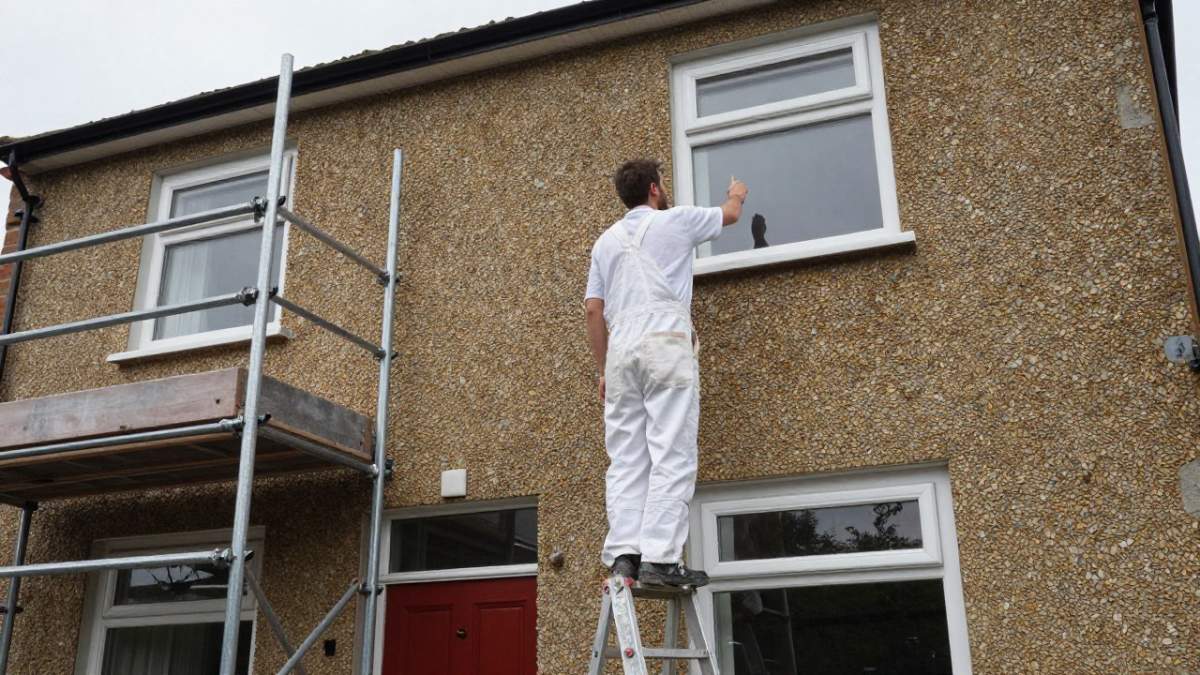
Homeowners rarely regret hiring a working platform, but they often regret underestimating how much ladder repositioning eats into a painting schedule.
Here is the honest comparison. A ladder is cheap to own and quick to lean against a wall.
The Health and Safety Executive guidance on safe ladder use is blunt about this: ladders are for low-risk, short-duration work where a more stable platform is not reasonably practicable. Repainting a full elevation is neither short nor low-risk.
| Factor | Ladder | Scaffold Tower | Professional Scaffold |
|---|---|---|---|
| Setup time | Minutes | 1-2 hours | Half a day, by a competent team |
| Stability | Single contact point | Good, if built correctly | Full platform with guardrails |
| Reach along a wall | Reposition each time | Limited footprint | Continuous run |
| Best for | Small, low patches | Single-height access | Full elevations, gutters, fascia |
Scaffolding Hire Cost for House Painting: What Drives the Price
Scaffolding hire cost for house painting depends on pricing factors such as elevation length, height, ground conditions, and hire duration, and pricing depends on quantity, dates, and delivery. For current prices or a quote, see the Ironclad Scaffolding website.
What moves the number most:
- Run length and lift height. Most domestic firms price by the metre of run and the number of lifts, so a 10-metre elevation at two lifts is a different order from a 25-metre wrap at three.
- Ground conditions. Sloping gardens, decking, and blocked access add labour and sometimes require base plates or spreader pads.
- Duration. Packages typically include a standard hire period, with a weekly charge thereafter. Check the current terms on the Ironclad Scaffolding website.
- Licences. A scaffold on a public footpath or highway needs a licence, which adds admin time.
- Design complexity. Chimney stacks, bay windows, conservatory roofs and awkward returns need bespoke design, adding drawing time and materials.
As a working guide, most domestic painting scaffolds fall into a few broad bands. A single elevation on a two-storey semi-detached house typically lands in the low-to-mid four figures in GBP once erection, dismantling and a standard hire period are included. Wrapping three sides of a detached property, or adding a chimney lift, pushes the figure higher. These are not quotes, they are the shape of the market so you can sanity-check what you are offered.
A like-for-like cost comparison for a two-storey repaint
Take a typical two-storey semi-detached house with a full front-elevation repaint, gutters and fascia included, expected to take two to three weeks.
| Access method | Typical upfront cost (GBP) | Hidden costs | Time impact |
|---|---|---|---|
| Ladder (owned or borrowed) | £0-£150 | Repositioning time, higher risk, likely second coat needed for finish | Adds days across a full elevation |
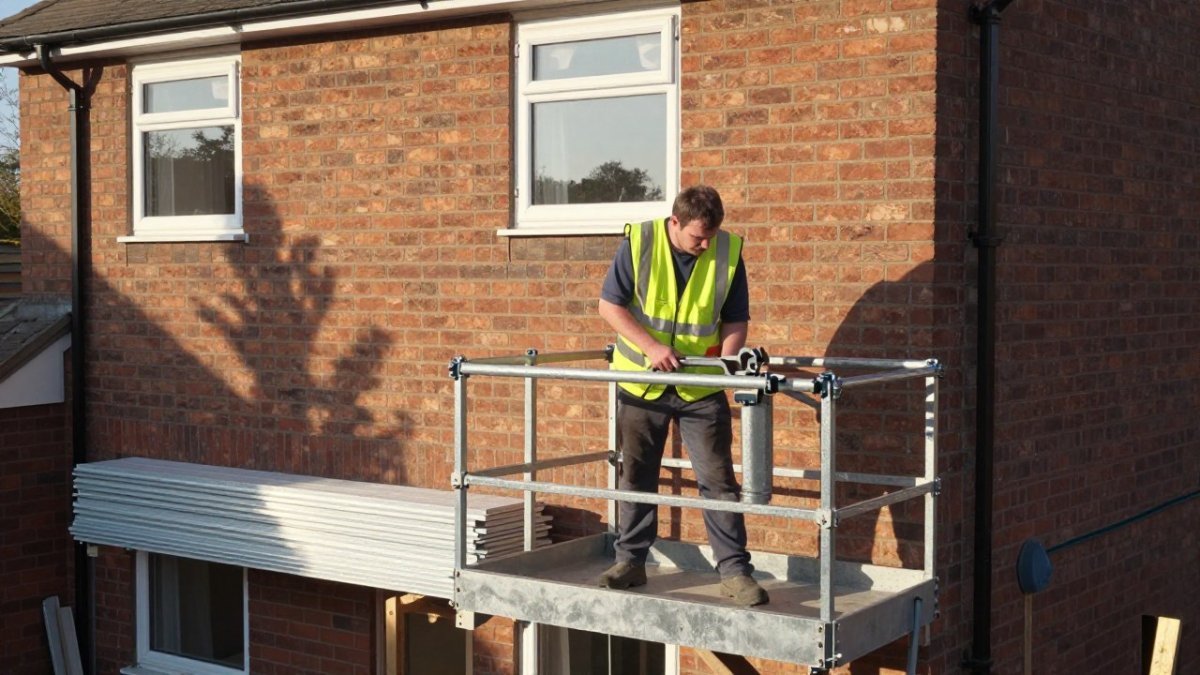
| DIY scaffold tower (hire) | £150-£400 for the hire period | Delivery, erection time, competence and inspection responsibility | 1-2 hours to build, limited footprint, frequent moves |
| Professional scaffold (single elevation) | Low-to-mid four figures | Licence fee if on highway, overrun weeks | Half a day to erect, half a day to dismantle |
The ladder looks cheapest on paper, but a full elevation repaint from a ladder means climbing down and re-footing repeatedly, which can stretch the job.
A professional scaffold front-loads the cost but reduces the repositioning cycle.
Watch out: a quote that looks cheap per week can cost more overall if the included hire period is short and your painting overruns. Always compare the total for your expected duration, not the headline weekly rate.
Ironclad Scaffolding packages include ten weeks of hire. For a fuller breakdown, see our guide to the cost of domestic scaffolding hire.
How Long to Hire Scaffolding for Painting
Scaffolding for exterior painting runs for as long as the painting schedule requires, including weather buffer. Plan the schedule before the scaffold goes up.
Weather is the variable nobody controls. Exterior emulsion and masonry paint need dry, mild conditions, and a wet fortnight can push a job back fast. If your project is part of a larger renovation, our article on how long scaffolding hire should last explains how overrun weeks are typically handled.
Safety, Fall Prevention and Working at Height Rules
Working at height remains one of the biggest causes of serious injury in construction and maintenance, and painting is squarely in scope. The Work at Height Regulations set out the hierarchy: avoid work at height where you can, prevent falls where you cannot avoid it, and minimise the distance and consequences of a fall.
For a homeowner, that translates into three practical checks:
- The platform must have guardrails, toe boards, and a safe means of access.
- The scaffold must be erected by competent people and inspected before first use and at regular intervals (Scaffolding).
- The structure must be stable, with proper ties to the building and firm footings.
A ladder leaned against a gutter does not meet these requirements. Our guide to scaffolding safety requirements for home renovations covers the checks that apply before work starts.
Getting a Domestic Scaffolding Quote: What to Check
A domestic scaffolding quote should be written, itemised, and specific about what is and is not included. Verbal estimates and one-line prices are where disputes start.
Check these before you compare:
- Is erection and dismantling included, or priced separately?
- What hire period is covered, and what is the weekly rate after that?
- Who arranges the highway licence, and who pays for it?
- Is the quote based on a site visit or a photo?
- Are ties, fans, and protection for windows and gutters listed?
Our guide to comparing scaffolding quotes like for like walks through the missing items that make a cheap quote expensive later. Ironclad Scaffolding offers written quotes within 24 hours and a 3D scaffold viewer for visualising the proposed structure.
When Professional Scaffolding Is Worth It: A Decision Framework
Professional scaffolding is worth it when the work is above first-floor level, runs along more than a small section of wall, or will take longer than a day. Below that threshold, a tower or a platform ladder can be the sensible call. The framework below turns that rule of thumb into a decision you can apply to your own house.
Step 1: Measure the job, not the house
Three numbers decide most cases: the height of the working area, the length of the run, and how many days the painting will take.
- Height. Anything above roughly 3.5 metres, about first-floor window head height on a typical two-storey home, puts you into fall-risk territory where a ladder is the wrong tool for sustained work.
- Run length. A single window or door surround is a ladder job. A full elevation is not, because every metre of run means another reposition.
- Duration. A touch-up takes an hour. A repaint takes days to weeks. The longer the job, the more the ladder's repositioning penalty compounds.
Step 2: Match the access to the situation
| Your situation | Recommended access | Why |
|---|---|---|
| Single-storey bungalow, one elevation | Platform ladder or small tower | Low height, short run, manageable risk |
| Two-storey house, full elevation repaint | Professional scaffold | Continuous platform, guardrails, no repositioning |
| Gutters, fascia and soffits at height | Professional scaffold | Work is overhead and sustained; ladders are unsuitable |
| Awkward spaces over stairs or a porch | Professional scaffold with bespoke design | Standard towers will not fit or reach safely |
| Quick touch-up under a window | Ladder, short duration | Low-risk, short-duration exception |
| Large flat-roof or commercial elevation | Powered access (MEWP) | Clear ground and long reach favour machine access |
Step 3: Weigh the alternatives honestly
Full scaffolding is not the only safe option. Tower scaffolds suit single-height access where the ground is firm and level, but they have a small footprint and you must be competent to erect and inspect them. Platform ladders bridge the gap for low, short work. Powered access such as a cherry picker or scissor lift suits large or awkward elevations, but needs clear ground and a trained operator, and is rarely cheaper than scaffold for a domestic repaint once delivery and hire are counted.
Step 4: Account for setup, scheduling and disruption
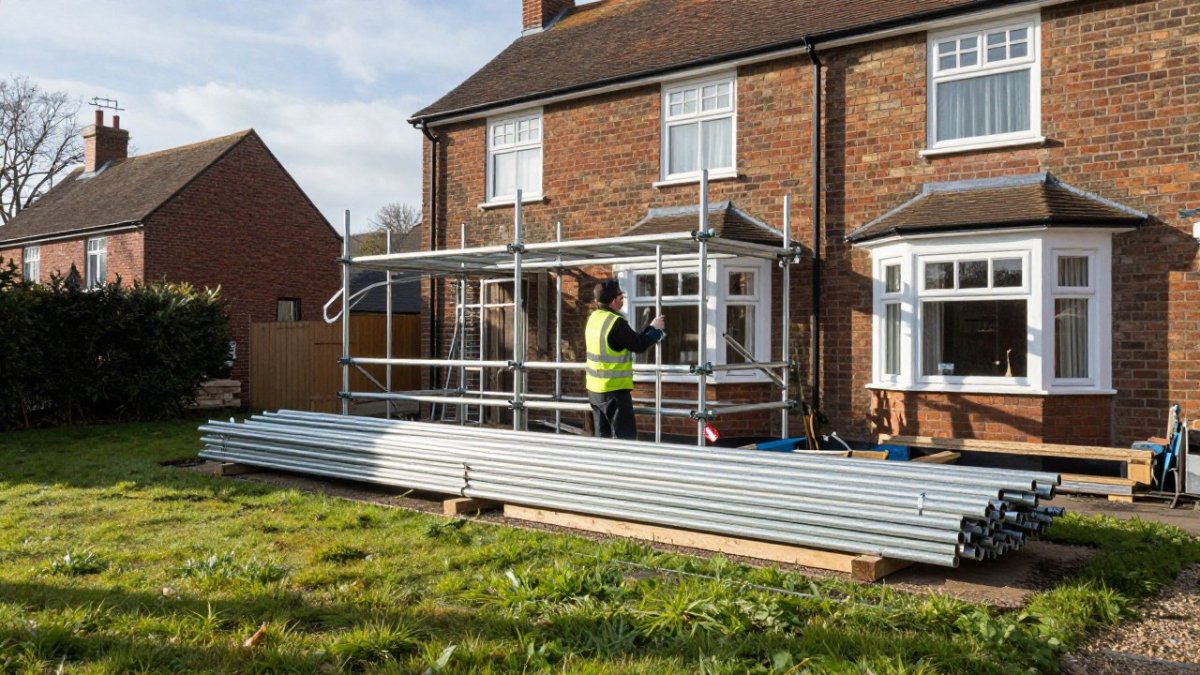
Setup and dismantling are real project costs. A professional team typically needs half a day to erect and half a day to dismantle a domestic painting scaffold, and the date must be booked in advance. The scaffold goes up before painting starts and comes down after the last coat, so the hire period must cover the whole painting window, including weather buffer. A tower you build yourself takes one to two hours each time and you carry the inspection duty. Scheduling the scaffold around the painter, rather than the other way round, is where most delays creep in.
Step 5: Check responsibility before you hire
Insurance and liability sit with whoever erects the structure. If you hire a professional provider, ask for evidence of public liability insurance and confirmation that the scaffold will be inspected before first use and at the required intervals. If you build a tower yourself, that responsibility, and the risk, is yours.
Where the job is a full exterior repaint or a gutter and fascia overhaul, the value shows up in finish quality as much as safety: a steady hand on a level platform produces a cleaner line and fewer touch-ups, before you count the hours saved climbing.
Book Your Scaffolding Assessment
The decision comes down to height, run length, and duration. If your painting project clears those thresholds, the next step is a proper assessment rather than a guess.
Ironclad Scaffolding handles the highway licence and includes ten weeks of hire in every package. You can also use the 3D scaffold viewer for visualising the structure and receive a written quote within 24 hours.
If you are ready to move, you can get an instant online scaffolding quote from Ironclad Scaffolding.
Painting a full elevation from a ladder is the kind of job that looks manageable until the third reposition. Get the access right first and the painting gets simpler.
Frequently Asked Questions
Is scaffolding worth it for painting a house?
It depends on height, area and duration. Professional scaffolding gives a stable working platform with guardrails, which reduces fall risk and lets painters work faster with a steadier hand. For two-storey exteriors, gutters and large wall areas, the time saved and finish quality usually justify the cost. For a single small bungalow wall, a platform ladder or tower scaffold may be enough. Weigh the hire cost against ladder movements, rework and safety.
Is it cheaper to hire scaffolding or use a ladder for painting?
A ladder costs less upfront, but it is not always cheaper overall. Ladder work is slower, requires frequent repositioning and carries a higher fall risk. Professional scaffolding hire adds cost but reduces the number of moves. Compare the full picture: hire, setup and dismantling, project duration and potential rework. Ask for a domestic scaffolding quote so you can compare like for like.
How long do you need scaffolding for painting?
Scaffolding duration for exterior painting depends on wall area, weather and prep work. A single elevation may take a few days; a whole house with gutter painting and repairs can run longer. Build in drying time between coats. When comparing providers, check how many weeks of hire are included and what the weekly rate is after that, so overruns do not surprise you.
Do I need a licence for scaffolding on a public pavement?
Yes. If the scaffold sits on or over a public highway or pavement, you need a highway licence from the local council. The application, conditions and fees vary by authority. A professional provider should manage this for you, but confirm who holds the licence and what happens if the council imposes conditions. Ask for written confirmation before work starts.