 blog
How Long Should Scaffolding Hire Last for a Renovation?
Last Updated: November 15, 2026
Quick Summary
Scaffolding hire duration for a home renovation ranges from a few days for minor gutter repairs to several weeks for roof work, with home extensions needing the longest hire. Ironclad's packages include ten weeks, and the hire period should be matched to the build programme before work starts.
- Minor repairs and gutter work usually need only a few days of scaffold hire.
- Roof repairs and re-tiling commonly need several weeks of hire.
- Home extensions need the longest hire, as scaffolding stays up through every stage.
- Ironclad packages include ten weeks of hire, with extra weeks charged at a weekly rate.
- Check the excess week rate and dismantling notice requirements before signing any quote.
Table of Contents
- Why Scaffolding Hire Duration Matters for Renovations
- How Long Scaffolding Is Typically Hired For Home Projects
- What to Check on a Scaffolding Quote Before You Sign
- Arranging a Scaffolding Highway Licence Without the Hassle
- How to Verify a Scaffolding Contractor's Qualifications
- What Happens If Your Renovation Overruns the Hire Period
- Booking Scaffolding for Your Kent Renovation Next
- Frequently Asked Questions
Why Scaffolding Hire Duration Matters for Renovations
Scaffolding hire duration is one of the first things that shapes a renovation budget, and one of the most often misjudged. Homeowners in Kent tend to plan the building work carefully and then treat the scaffolding as an afterthought, which is where overruns begin.
The length of time scaffolding stays up affects three things: the cost of the job, the disruption to the household, and the schedule for everyone else on site. A roof repair that drags on for a fortnight longer than planned is not just a few extra days of hire. It can push back the plasterers, delay the decorators, and leave the property looking unfinished for longer than anyone wanted.
Projects are often quoted around the expected build programme, but the hire period is sometimes chosen loosely, and the two can fall out of step. Getting the duration right at the start is generally cheaper than fixing it halfway through.
This guide explains how long scaffolding is typically hired for common home projects, what to check on a quote, how highway licensing fits into the timeline, and what happens if the work runs over. The aim is simple: help you choose a hire period that matches the job in front of you.
How Long Scaffolding Is Typically Hired For Home Projects
Most domestic scaffolding hires cover a few weeks, but the right length depends on the scope of the work. Check current year-specific hire durations before you settle on a period. A small repair to a single elevation needs far less time than a full roof replacement on a large detached house. The duration is not chosen in isolation: it should be set against the builder's programme, the weather risk, and the point at which the scaffold can safely come down.
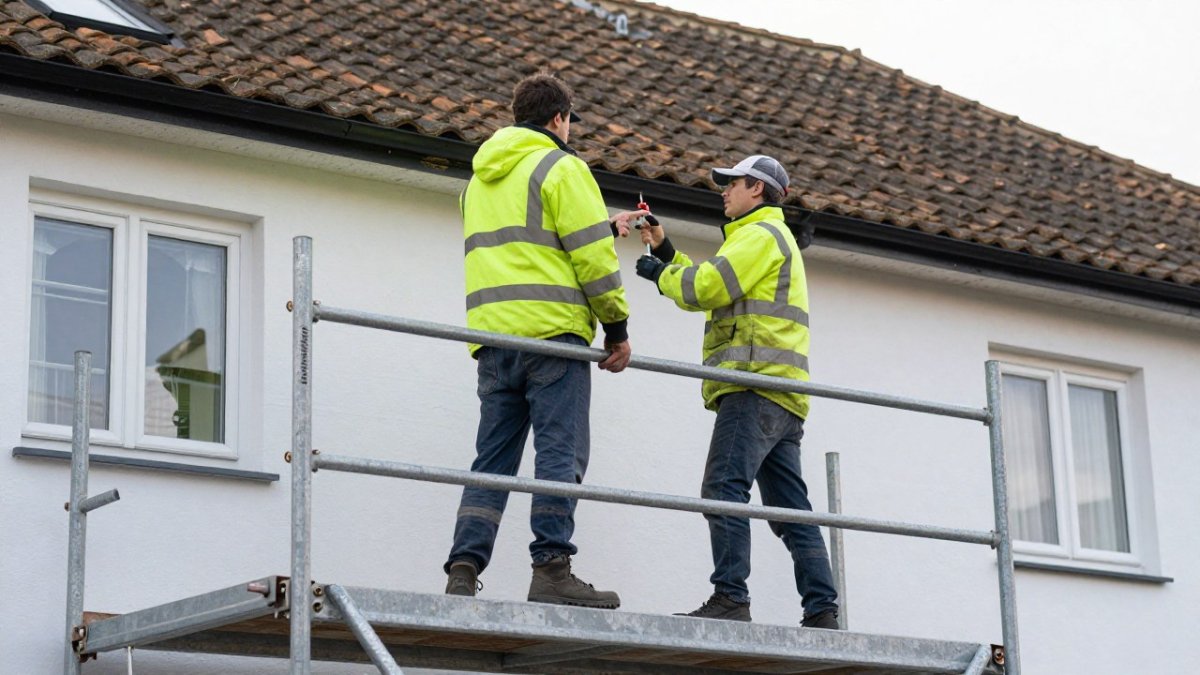
As a rough guide, the following patterns are common in domestic projects:
- Minor repairs and gutter work: often completed within a few days, so the hire period is usually short.
- Roof repairs and re-tiling: these commonly need several weeks, since access is needed while the work moves across the roof.
- Home extensions: these tend to need the longest hire, because the scaffold stays up through the build, the roofing, and the finishing stages.
- Exterior painting and maintenance: duration depends on the size of the property and the number of elevations being treated.
Several factors push the hire period up or down. Height and the number of elevations affect how much scaffold is needed and how long erection and dismantling take. Access matters too: a tight side return or a sloping garden can slow the build and the strike. Design complexity, such as a scaffold that has to be adapted around a conservatory or a bay window, adds time at both ends. Weather is the variable no one controls, and a roof job that runs into a wet fortnight will usually need the scaffold to stay up longer.
Our packages include ten weeks of hire. For a larger extension, it is worth confirming the programme with us before work starts so the hire period matches the build.
If the work is likely to run beyond the included period, ask about the weekly rate for extra hire before you sign. Understand how excess week charges are calculated so you know what an overrun would cost. That figure, rather than the headline price, is what determines the true cost of an overrun. It is also worth asking how much notice you need to give before dismantling, since a short-notice strike can cost more than a planned one.
UK government guidance on working at height
The right hire length depends on the type of job, so here is how common projects compare.
| Project | Typical hire pattern | Key factor |
|---|---|---|
| Minor repairs and gutter work | A few days | Short build, short hire |
| Roof repairs and re-tiling | Several weeks | Access moves across the roof |
| Home extensions | Longest hire | Scaffold stays through all stages |
| Exterior painting | Varies by property | Size and number of elevations |
| Packages from Ironclad | Ten weeks included | Extra weeks charged at weekly rate |
What to Check on a Scaffolding Quote Before You Sign
A quote is only useful if you know what it includes. Learn how to compare scaffolding quotes effectively before you decide between offers. Before you agree to anything, check that the hire period, the scope of work, and the extras are clearly stated.
Look for these points:
- The hire period: confirm how many weeks are included and what the rate is for any extra time.
- Erection and dismantling: make sure both are covered, not just the initial build.
- Highway licensing: check whether a licence is needed for the position of the scaffold and who is responsible for arranging it.
- Access and protection: confirm how the scaffold will be accessed and whether any protection sheeting is included.
- Written confirmation: a proper written quote is more reliable than a verbal estimate.
We provide written quotes within 24 hours, so you have a clear document to compare against any other offer you receive. Pricing depends on the size of the property, the duration, and the access required. Visit the Ironclad Scaffolding website for current prices or to request a quote for your specific job.
Arranging a Scaffolding Highway Licence Without the Hassle
If the scaffold needs to stand on the public highway, such as a pavement or the road beside your property, a highway licence is usually required. This is the step that many homeowners find confusing, and it can hold up a project if left until the last minute.
The licence is issued by the local highway authority. Follow a step-by-step permit process for homeowners to see what to submit and when. The process generally involves submitting details of the proposed scaffold position and the expected dates. Because the hire period and the licence period need to match, the timing of the application matters.
We handle highway licensing as part of our service, which removes the administrative load from you. Getting the paperwork started early is still sensible, as councils can take time to respond. Confirm the licence dates against your hire period so the scaffold does not stand longer than it is permitted to.
UK government guidance on highway licences and permits
How to Verify a Scaffolding Contractor's Qualifications
Checking a contractor's qualifications is one of the most important steps before hiring, particularly for work on a home extension or a roof. Most practitioners find that a reliable contractor will produce evidence of training, insurance, and compliance without hesitation, and will explain how the scaffold will be inspected rather than simply asserting that it is safe.
Start by asking for proof of public liability insurance and employer's liability cover. Public liability cover protects you if the scaffold damages your property or injures a third party; employer's liability cover protects the scaffolders themselves. Ask for the certificates, check the policy is current, and confirm the level of cover is proportionate to the job.
Next, ask who will actually erect the scaffold and what training they have completed. Scaffolding work is covered by the Work at Height Regulations 2005, and the people doing the work should be able to explain how those regulations apply to your job. You do not need to memorise the detail, but a contractor should be able to talk about it clearly.
Questions to Ask About Training and Insurance
Use these questions to test a contractor's credentials:
- Who will erect the scaffold, and what training have they completed?
- Can you show current public liability and employer's liability insurance certificates?
- How is the scaffold inspected after erection, and is there a written record?
- Who is responsible for the scaffold if an issue arises during the hire period?
- Will the work follow the relevant safety guidance for scaffolding, including the Work at Height Regulations 2005?
- Can you provide a risk assessment and method statement for the job?
A contractor who answers these clearly is more likely to deliver a safe, well-run job. Vague answers are a warning sign worth taking seriously.
HSE guidance on the Work at Height Regulations 2005
What Happens If Your Renovation Overruns the Hire Period
Renovations can overrun for many reasons, such as weather delays or hidden structural problems. When the work takes longer than planned, the scaffold must stay up until the job is finished and safe to dismantle.
Ten weeks of hire covers most standard domestic projects, but if your build runs beyond that, you will pay for the additional time. The weekly rate for extra hire is set out in the quote, so check it before you sign. Asking about the excess week rate early means no surprises later in the project.
To reduce the risk of overrun, agree a realistic programme with your builder before the scaffold goes up. Review progress regularly, and let us know as soon as the timeline starts to slip, so the extension period can be kept as short as possible.
Booking Scaffolding for Your Kent Renovation Next
Choosing the right hire duration comes down to matching the scaffold to the build programme. Be clear about the scope of work, check the quote carefully, and agree the highway licence dates before the scaffold goes up.
At Ironclad Scaffolding, we offer instant quotes, a 3D scaffold viewer, and written quotes within 24 hours. With ten weeks of hire included and highway licensing handled for you, the planning side of your renovation is simplified.
Get started with Ironclad Scaffolding today and plan your hire period with confidence.
Frequently Asked Questions
How do I choose a reliable scaffolding contractor?
Start by asking for a written quote that lists the hire period, delivery, erection, dismantling and any highway licence fees. Check that the company can show current public liability insurance and a relevant training record for its scaffolders. Ask for examples of residential projects similar to yours, such as roof repairs or home extensions, and whether the team has worked in your area before. A contractor who answers these questions clearly and in writing is usually a safer choice than one who relies on a verbal estimate or a low headline price.
What should a scaffolding quote include?
A complete scaffolding quote should state the duration of hire, the scaffold type and height, the number of lifts or bays, and whether erection and dismantling are included. It should also show whether a highway licence is needed and who arranges it, along with any charges for extending the hire beyond the included period. Ask how weekly extension costs are calculated, whether VAT is added, and when the quote expires. Once you have written confirmation of these details, you can compare offers on a like-for-like basis.
Do scaffolding contractors arrange highway licences?
Many contractors arrange highway licences where scaffolding or materials need to occupy part of a public road or pavement. In England, the local highway authority usually issues the licence, and the application normally needs to be made in advance of delivery. Confirm in writing whether the contractor handles the application, who pays any council fee, and what happens if the licence is refused or conditions change. Make sure the scaffold is positioned and lit as the licence requires.
How can I check whether a scaffolding contractor is qualified?
Ask for evidence of public liability insurance and employers' liability insurance, and ask which training the scaffolders hold. Ask whether the work follows the guidance in the Work at Height Regulations 2005. A reputable contractor will also provide a method statement or risk assessment for your job on request.