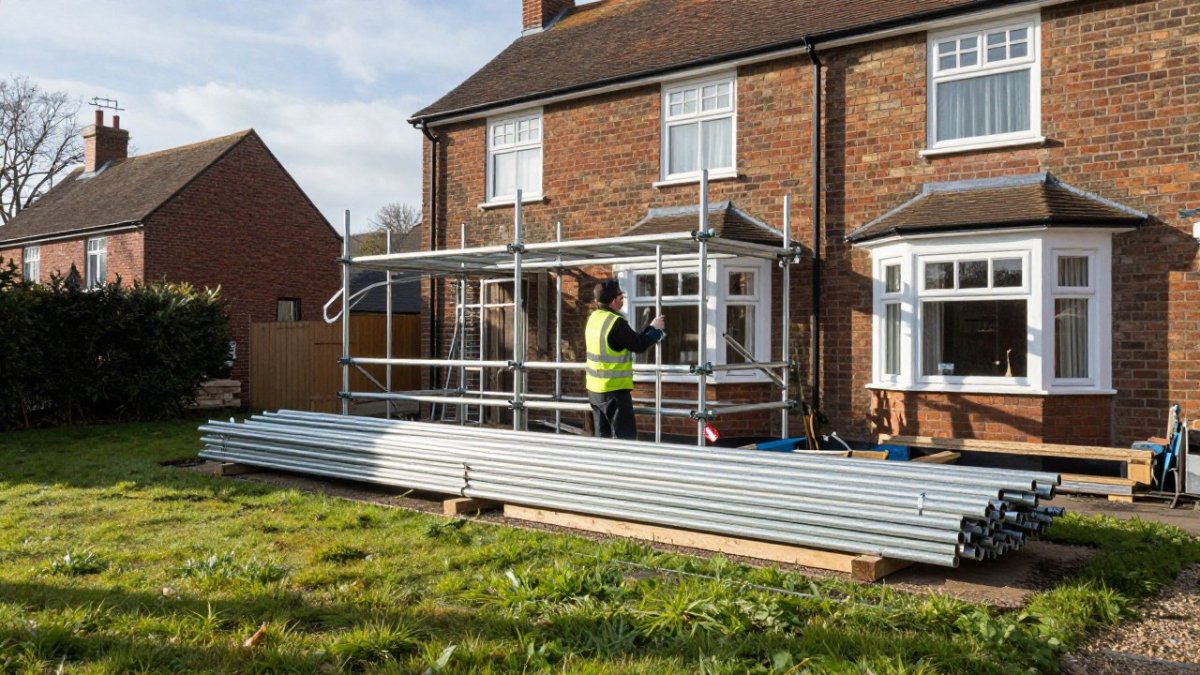
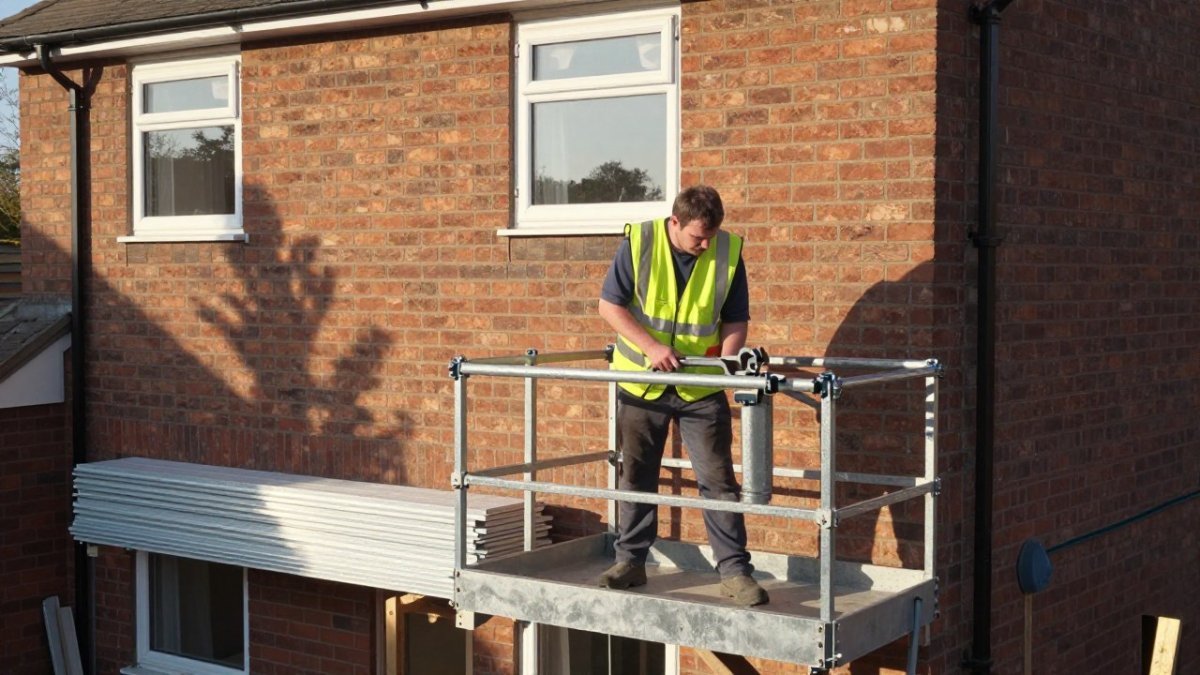
 blog
Scaffolding Compliance Services: Benefits for Kent Projects
Quick Summary
Scaffolding compliance services make sure a scaffold meets legal and safety standards and that you can prove it through design, erection, regular inspection and records. For residential projects in Kent, they cover the duties that often fall on the homeowner or main contractor.
- Compliance covers design, erection, regular inspection and the records that prove each check happened.
- Inspection is required before first use, after alteration, after an event, and at regular intervals such as every seven days.
- Each inspection record should show the date, the inspector, what was checked, any defects and the action taken.
- Specialist support suits scaffolds up for weeks, altered during the job, or standing on a public highway.
- Confirm the highway licence is in place before the scaffold goes up, as unlicensed scaffolds can face fines and removal.
Table of Contents
- Why Scaffolding Compliance Matters on Residential Projects
- 1. Meeting Your Legal Duties Under UK Health and Safety Rules
- 2. Reducing Fall Risk Through Structured Scaffold Inspection Requirements
- 3. Working From a Scaffolding Compliance Checklist Across the Project Lifecycle
- 4. Handling Scaffolding Permits and Licences Without the Admin Burden
- 5. Planning Scaffolding Hire Duration for Renovations
- How to Verify a Scaffolding Provider Before You Hire
- Booking a Compliant Scaffold for Your Next Project
- Frequently Asked Questions
Why Scaffolding Compliance Matters on Residential Projects
Last Updated: November 24, 2026
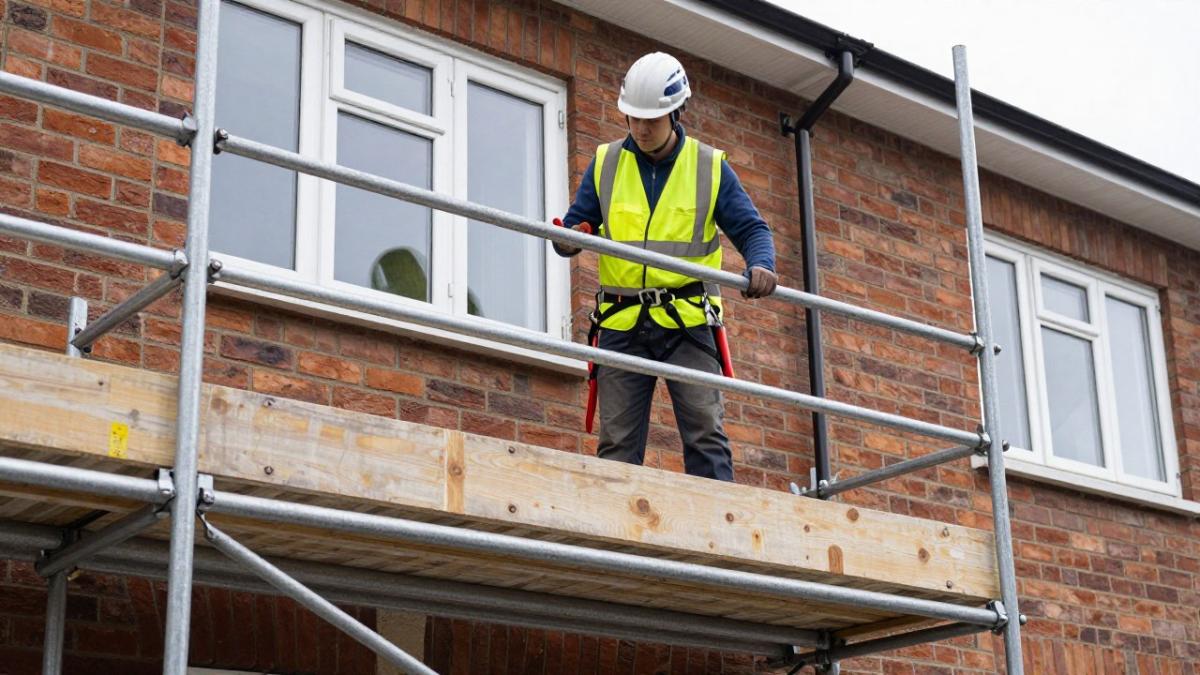
Most homeowners in Kent think of scaffolding as a temporary structure that goes up and comes down.
Compliance means the scaffold meets the legal and safety standards that apply to it, and that you can prove it. For a residential job, that usually covers the design, the erection, regular inspection and the records that show each check took place.
Here is what good compliance support typically looks like in practice:
- A scaffold built by trained people to a recognised design
- Inspections carried out and written down at set points
- Clear records you can show a council, insurer or building inspector
This article explains the main considerations for scaffolding compliance on Kent projects.
1. Meeting Your Legal Duties Under UK Health and Safety Rules
The main rules here come from UK health and safety legislation (Health and Safety at Work etc. Act 1974). Together they make clear that whoever controls work at height must make sure it is planned, supervised and carried out safely. On a domestic job, that duty often falls on the homeowner or the main contractor who appoints the scaffolder.
Working through these rules is easier with a provider who knows them well. Compliance services usually cover:
2. Reducing Fall Risk Through Structured Scaffold Inspection Requirements
Falls from height remain one of the most serious risks on any site, and a scaffold that looks sturdy can still have a loose board, a missing guardrail or a base that has shifted in the rain. Structured inspection is how these faults get caught before someone is hurt, but "structured" means more than a quick walk-round. It means knowing when an inspection is legally required, who is competent to carry it out, and what the record has to show.
When an inspection is required
Work at height rules require that a scaffold from which a person could fall must be inspected at set points, not just when someone remembers (Scaffolding). The triggers most practitioners work to are:
- Before first use, a handover inspection once erection is complete and before any trade relies on the platform
- After assembly or alteration, any change to the structure, including adding a fan, a loading bay or a temporary roof
- After an event, severe weather, impact from plant or vehicles, or any incident that could affect stability
A scaffold that is up for ten weeks is not inspected once; it is inspected repeatedly across its life. That repetition is the point.
Who is competent to inspect
An inspection is only as good as the person doing it. The person must have the training, knowledge and experience to identify defects, typically a scaffolder holding the relevant competence for the structure type, or a competent person appointed for the task. A site manager with no scaffold training ticking a box is not a compliant inspection, however neat the paperwork looks.
What a compliant record must contain
A signed record from each check is what proves the scaffold was safe on a given day. Without it, you are relying on memory, which will not stand up if something goes wrong. A record that survives scrutiny usually captures:
- The date, time and location of the inspection
- The name and role of the person who carried it out
- What was checked and the condition found
Watch out: a record that says only "scaffold checked, OK" tells an inspector nothing about what was examined or by whom, and is the first thing to be challenged after an incident.
Digital records and audit trails
Paper inspection sheets get lost, get wet and get filed in a van. A growing number of providers now issue inspection records digitally, time-stamped entries, photographs of defects, and a corrective-action log that shows a fault was fixed and re-checked rather than just noted. The practical benefit is retrieval: when an insurer, a building inspector or the Health and Safety Executive asks for the inspection history, a digital trail can be produced in minutes rather than reconstructed from memory.
The corrective-action loop
Inspection only reduces risk if defects are closed out. A sensible regime pairs every recorded defect with an owner, a fix and a re-check before the platform is returned to use. A missing guardrail that is logged but not replaced is worse than one that was never logged, because the record now shows you knew about it.
3. Working From a Scaffolding Compliance Checklist Across the Project Lifecycle
A scaffold has a life of its own: planning, erection, use, alteration and dismantling. Each stage carries different risks, and each stage has a different person responsible for getting it right. A checklist keeps those stages in order so nothing gets skipped, but the more useful question for a homeowner or main contractor is not just what to check, but who is doing it and whether that work sits with you or with a specialist.
The lifecycle, stage by stage
- Planning and design, site survey, ground conditions, access route, proximity to the public highway, and a design suited to the structure and loads. Responsibility typically sits with whoever specifies the scaffold.
- Erection and handover, competent erectors, correct materials, and a handover inspection before any trade uses the platform. Responsibility sits with the scaffolding contractor.
- Use and inspection, scheduled inspections at the statutory triggers, prompt repairs, and a record of each check. Responsibility is often split, which is where gaps appear.
- Alteration, a fresh inspection before anyone uses the changed scaffold, plus an updated record. Responsibility sits with whoever commissions the change.
- Dismantling, a safe, supervised takedown, a final record, and removal of highway licences and signage. Responsibility sits with the contractor, but the duty-holder should confirm it happened.
In-house versus retained specialist support
The ranking advice on this topic tends to stop at "keep good records". The practical decision most buyers actually face is whether to manage compliance themselves or bring in specialist support. There is no single right answer, but the trade-offs are reasonably consistent:
- Managing it in-house suits straightforward domestic jobs where the scaffolding contractor already provides inspection records and permits as part of the package. You keep control and avoid a separate fee, but you carry the administrative load and the risk of a missed inspection trigger.
- Retained specialist support suits multi-stage renovations, sites with public access, or anyone who does not want to track inspection dates and licence renewals themselves. You gain scheduled audits, a corrective-action log and a single point of contact, but you pay for the service and still retain the underlying legal duty.
A useful rule of thumb: if the scaffold will be up for more than a few weeks, will be altered during the job, or will stand on or over a public highway, the administrative burden rises sharply and specialist support tends to earn its place.
What a professional service actually delivers
When you are comparing quotes, it helps to know what "compliance service" should include rather than accepting the label. A credible scope typically covers:
- A documented inspection schedule tied to the statutory triggers
- Inspection records and a corrective-action tracker
- Confirmation that erectors and inspectors hold the relevant competence
Measuring whether it is working
Value is easier to judge with a few concrete measures: the proportion of scheduled inspections completed on time, the time taken to close out recorded defects, and how quickly records can be produced on request.
Watch out: the most common failure is not a badly built scaffold but a well-built one that quietly falls out of inspection after an alteration, the record shows a gap, and the gap is what an inspector will ask about first.
The article breaks the scaffold's life into stages, each with a different person responsible for getting it right.
| Stage | What happens | Responsibility |
|---|---|---|
| Planning and design | Site survey, ground conditions, access route | Whoever specifies the scaffold |
| Erection and handover | Competent erectors and handover inspection | Scaffolding contractor |
| Use and inspection | Scheduled inspections and prompt repairs | Often split |
| Alteration | Fresh inspection and updated record | Whoever commissions the change |
| Dismantling | Safe takedown and final record | Contractor, confirmed by duty-holder |
4. Handling Scaffolding Permits and Licences Without the Admin Burden
Many homeowners are surprised by how much paperwork a scaffold can need. Other permissions can apply depending on where the scaffold sits.
Before you commit to a date, check the basics:
- Will the scaffold stand on a pavement, road or verge?
- Does the scaffold overhang a neighbour's property?
- How long will the scaffold need to stay up?
Some councils process applications within a set period, so it helps to plan ahead. Our step-by-step scaffolding permit process guide for homeowners walks through each stage.
For official guidance on permits, see the Kent County Council highway licence guidance.
5. Planning Scaffolding Hire Duration for Renovations
How long you keep a scaffold up affects cost, safety and your neighbours. Renovations often run longer than planned, because weather, materials and trades all cause delays. A scaffold that is kept up too long can also wear out and need more inspection.
When you plan the hire period, consider:
- The length of the job, including a margin for delays
- Weather, especially on exposed sites
- Whether the work is done in stages, which may need the scaffold moved
Our packages include ten weeks of hire as standard. If a job runs longer, ask us how extra weeks are charged before you start.
How to Verify a Scaffolding Provider Before You Hire
Choosing the right provider matters as much as the compliance checks themselves. Use this short list before you sign anything:
- Ask who designed the scaffold and whether they are trained
- Ask for written proof of public liability insurance
- Ask how inspections are carried out and recorded
A reputable provider will answer these questions clearly. If the answers are vague, look elsewhere. For a deeper look at checks, read our guide on verifying scaffold safety standards in the UK and our seven insurance checks for scaffolders.
Ironclad Scaffolding provides written quotes within 24 hours.
Booking a Compliant Scaffold for Your Next Project
Good compliance protects your workers, your neighbours and your home. When you compare providers, look for clear records, proper permits and a plan that fits your schedule.
If you are ready to book, find a domestic scaffolding company in Kent and get an instant online quote to see your costs and options. Ironclad Scaffolding offers instant scaffold quotes, a 3D scaffold viewer, ten weeks of hire included and highway licence handling.
Frequently Asked Questions
What does scaffolding compliance involve?
Scaffolding compliance means the scaffold is planned, erected, inspected, used and dismantled in line with UK health and safety requirements. In practice this covers a documented design or assessment, erection by competent people, regular inspection with records kept, and clear handover information. A compliance service manages this paperwork and checks so that the homeowner or contractor is not left carrying the legal duties alone.
How often should scaffolding be inspected?
Scaffolding should be inspected by a competent person before first use, after any event that could affect its stability, and at regular intervals while it is in place. A written scaffold inspection requirements record should be kept for each inspection. Confirm the inspection plan with Ironclad Scaffolding when you request a quote.
Do I need a licence to put scaffolding on a public pavement or road?
In most cases, yes. Scaffolding that occupies the public highway usually needs permission from the local council, often called a highway licence. Ironclad Scaffolding handles the highway licence as part of its service, so you do not need to make the application yourself. Lead times vary by council, so raise the question early in your project planning.
What should homeowners check before hiring a scaffolding company?
Ask whether the scaffolders are trained and competent for the work, whether the company carries public liability insurance, and whether it provides a written quote and inspection records. A scaffolding compliance checklist is a useful way to compare providers. Ironclad Scaffolding provides written quotes within 24 hours, and you can request details of its training and insurance directly.