 how-to
7 Steps to Scaffold a Multi-Story House for Painting
Last Updated: November 1, 2026
Quick Summary
Scaffolding for painting a multi-story house is a temporary working platform that gives you safe, stable access to the full height of the exterior walls. Choose frame scaffolding for long facades and full repaints, a scaffold tower for single walls or gable ends, and a folding platform for low-level work.
- Frame scaffolding runs the full facade length and gives continuous horizontal coverage in bays.
- A scaffold tower suits one wall, one gable end, or buildings up to two storeys.
- Scaffolds need firm, level footing, with sole boards and base plates spreading the load.
- Inspect the scaffold before first use, at regular intervals, and after bad weather.
- Keep the scaffold up for the whole job rather than paying twice for erection.
Table of Contents
- Choosing Scaffolding for Painting a Multi-Story House
- Scaffold Types That Work for Exterior Painting
- Scaffold Tower for Painting a House: When It Is Enough
- Working Height, Reach and Horizontal Coverage
- Site Access, Ground Conditions and Uneven Slopes
- Scaffolding Safety Checks Before You Paint
- Scaffolding Hire Duration for Renovations
- Cost of Scaffolding for House Painting
- Frequently Asked Questions
Choosing Scaffolding for Painting a Multi-Story House
Scaffolding for painting a multi-story house is a temporary working platform that gives you safe, stable access to the full height of the exterior walls. It provides a proper surface to stand on, reach from, and move along. At Ironclad Scaffolding, we supply domestic scaffolding across Kent, and painting is one of the most common reasons homeowners ask about scaffolding.
Below, we walk through the key steps to consider when planning scaffolding for a painting project, from picking the right scaffold to budgeting the hire.
Why Ladders Fall Short on a House Facade
A ladder gives you one narrow point of contact and nothing else. Painting a two- or three-storey facade means constant climbing, repositioning, and reaching sideways at full stretch. That is where accidents happen. The Health and Safety Executive guidance on working at height is clear that work at height should be avoided where possible, and where it cannot be avoided, proper equipment must be used. A ladder is a last resort, not a painting platform.
A scaffold gives you a level work platform, both hands free, and room to move your paint tools along the wall.
Scaffold Types That Work for Exterior Painting
Three main scaffold types suit residential exterior painting, and each fits a different building shape and elevation. Choosing between them is not just about height, it is about how the scaffold wraps around the house. Proper access ensures that you can safely reach every corner of the siding once you choose exterior paint colors to refresh the facade.
- Frame scaffolding: the standard tube-and-frame system, erected in bays along the facade. Best for long walls, full-house repaints, and any elevation where you need continuous horizontal coverage.
- Scaffold tower: a free-standing structure on castors or base plates. Best for single walls, gable ends, and smaller houses where a full run is not justified.
- Folding platform: a compact, quick-to-set platform for low-level work such as porches, bay windows, and single-storey extensions.
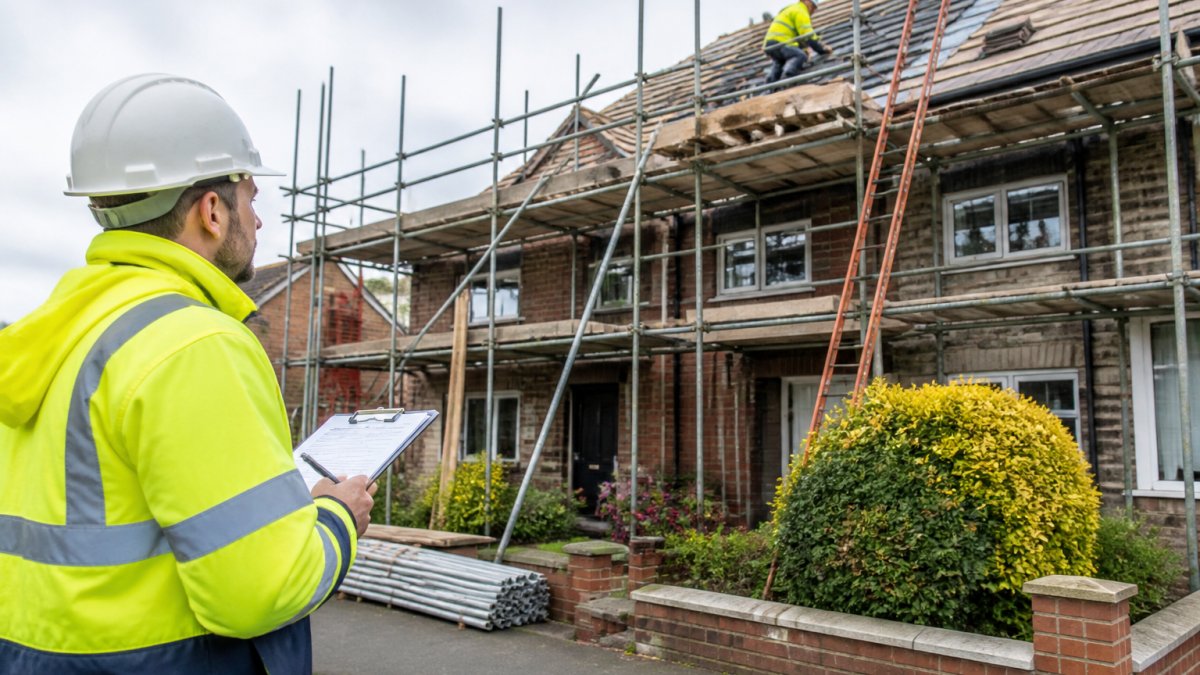
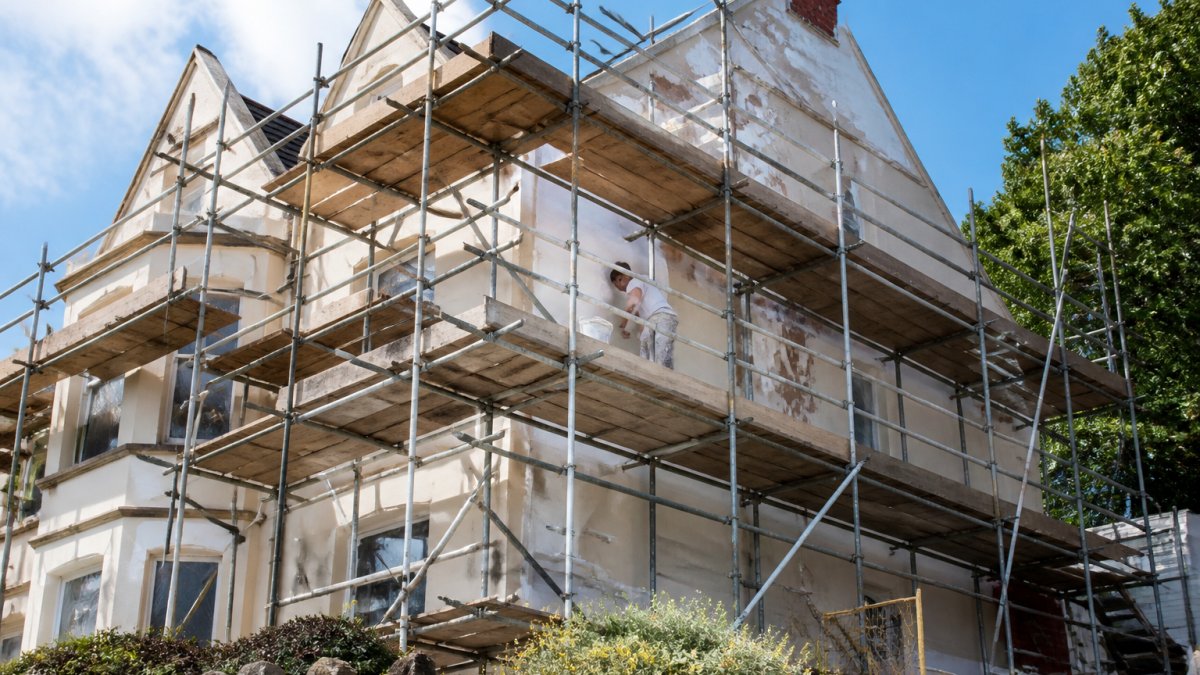
Frame scaffolding is commonly used for multi-storey houses. It runs the full length of the facade, gives continuous horizontal coverage, and lets you work in bays without climbing down. A scaffold tower is more flexible but limited in height and footprint. The folding platform is handy for small jobs but not for a full two-storey elevation.
Laying Out Scaffold Around Corners, Gables and Eaves
A multi-story house is rarely a simple flat box, and the scaffold has to follow the building's shape. The layout is typically planned in this order:
- Set the principal facade first. Run the frame in bays along the longest wall, keeping bay widths consistent so platform boards and guardrails line up. This is the elevation you will paint most efficiently.
- Return around corners. At an internal or external corner, add a short return bay so the scaffold wraps the corner rather than stopping short. This gives you a safe standing position to paint the quoin and the first metre of the adjoining wall without leaning around the edge.
- Step down or bridge at gables. A gable end rises to a peak, so a single platform level will not follow the roofline. Either step the scaffold down in stages to follow the rake, or keep a level platform and use a longer reach for the upper triangle, accepting that the top section is slower to paint.
- Mind the eaves overhang. Eaves and fascias project beyond the wall line. Set the scaffold far enough out to clear the overhang, but close enough that you can still reach the wall below it. Too close and the platform boards foul the eaves; too far and you are stretching.
- Plan roof transitions. Where a lower roof meets a higher wall, a single-storey extension against a two-storey house, for example, the scaffold often needs to be raised to the higher wall while leaving the lower roof clear. Discuss this with your supplier before erection, because it affects both the design and the hire period.
One common pattern is to scaffold the two main elevations fully and use a tower for a gable end or a small return.
For a single elevation or a complex gable, a tower may be a more suitable option.
Scaffold Tower for Painting a House: When It Is Enough
A scaffold tower for painting a house is enough when the work is limited to one wall, one gable end, or a building up to two storeys. It is quick to erect, needs less ground space, and suits a single painter working through one elevation at a time.
Where it falls short is on long facades and three-storey walls. You end up moving the tower repeatedly, and each move costs time. Towers must be built to the manufacturer's instructions and never exceed their stated height-to-base ratio.
Working Height, Reach and Horizontal Coverage
Working height is the height at which you can safely stand and paint, not the height of the scaffold itself. Guardrails sit above the platform, so your reachable painting height is roughly your body height plus arm reach above the platform level.
Plan for these figures when you specify the scaffold:
| Building Type | Platform Levels Needed | Typical Reach Per Level |
|---|---|---|
| Single storey | 1 | Ground floor walls and eaves |
| Two storey | 2 | Ground and first-floor walls |
| Three storey | 3 | Full facade plus roofline |
Horizontal coverage matters just as much. Frame scaffolding in bays lets you paint a full section before moving along. Short towers force constant repositioning. Plan the bays around the wall length so you are not shuffling the structure every few metres.
Site Access, Ground Conditions and Uneven Slopes
Ground conditions decide whether a scaffold is safe before anyone picks up a brush. Scaffolds need firm, level footing, and soft soil, slopes, and uneven paving need attention before the first standard goes up.
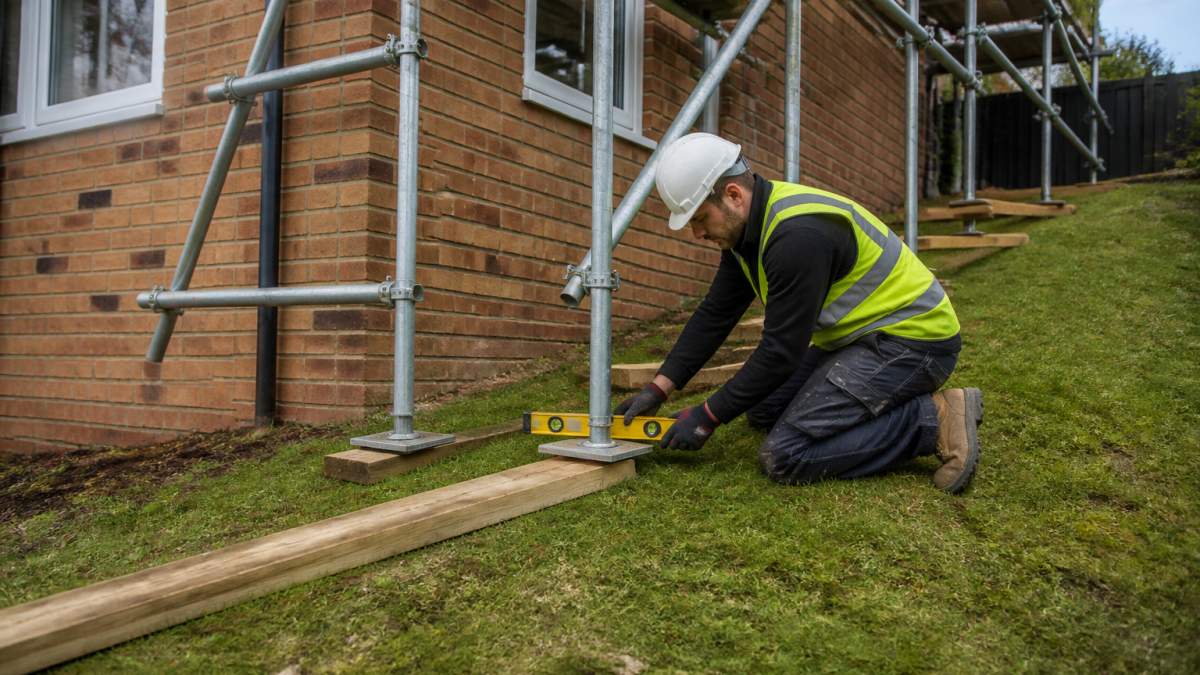
Common fixes include:
- Sole boards spread the load on soft ground.
- Base plates sit under every standard for a stable footing.
- Adjustable jacks level the scaffold on gentle slopes.
- Ground checks confirm drains, manholes, and paving can take the weight.
Access is the other half of the job. If your property has tricky ground or tight access, our guide to residential scaffolding design and planning tips covers how to plan around it.
Scaffolding Safety Checks Before You Paint
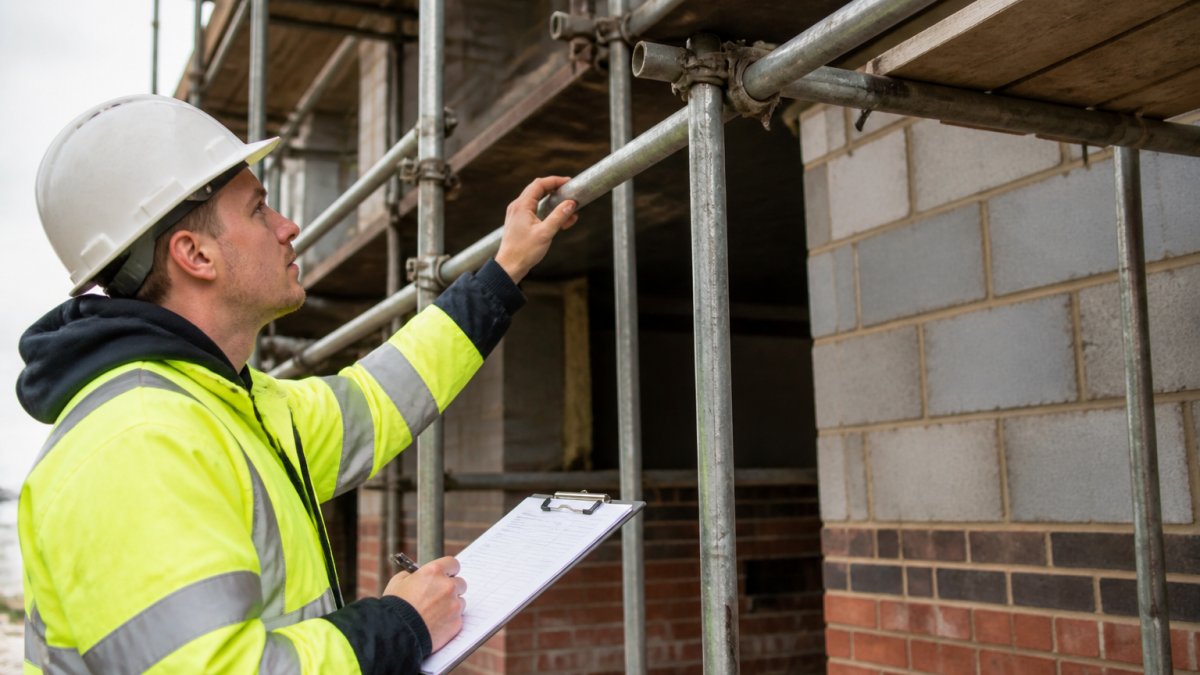
Safety checks are not optional, and they happen before the first tin is opened. A scaffold should be inspected before first use, then at regular intervals, and after any alteration or bad weather. The HSE guidance on scaffold inspection sets out what a competent person must check.
Run through this list before you start:
- Guardrails and toe boards in place on every platform
- All base plates and sole boards seated firmly
- Platform boards fully covered, no gaps
- Safe ladder access to each level
- Scaffold tags and inspection records up to date
- Load limits respected, with paint stored sensibly
Load limits matter. Scaffold boards carry a stated weight capacity, and paint tins add up quickly. Spread the load across the bay. For a deeper checklist, see our scaffolding safety checks for home extensions.
Scaffolding Hire Duration for Renovations
Scaffolding hire duration for renovations often runs longer than expected. Painting a full facade, prepping surfaces, and waiting out wet weather all add days. A two-storey repaint often needs several weeks of access, and roof repairs or extensions can run longer.
Plan the hire around the whole job, not just the painting. If render repairs or gutter work are on the list, keep the scaffold up and do them in the same hire. Our guide to scaffolding hire duration for roof repairs explains how to estimate the time for similar projects.
Cost of Scaffolding for House Painting
The cost of scaffolding for house painting depends on height, facade length, ground conditions, and hire duration. A small tower and a full three-storey frame are different jobs with different costs. Pricing depends on the size of the property, the dates you need, and any highway licence required.
What most quotes actually contain is a set of cost lines. Understanding them is the difference between comparing like for like and being surprised by the final invoice:
- Hire charge: priced per week or per fortnight, based on the scaffold's footprint and the number of platform levels.
- Erection and dismantling: typically a labour charge per job, influenced by height, access and complexity.
- Delivery and collection: a transport charge that varies with distance and load size. Ask whether it is included or added at the end.
- Highway licence: if the scaffold stands on a pavement or road, the local highway authority charges for the licence. The fee and the notice period vary by authority, so confirm both before you book.
- Extra weeks: hire is typically quoted for a set period, and extending it is generally charged at a weekly rate. Confirm the rate when you request a quote. If painting, render repairs or gutter work all need the scaffold, keep it up for the whole job rather than paying twice for erection.
Several factors affect the final cost, including how long the scaffold stays up and whether a highway licence is needed for pavement access.
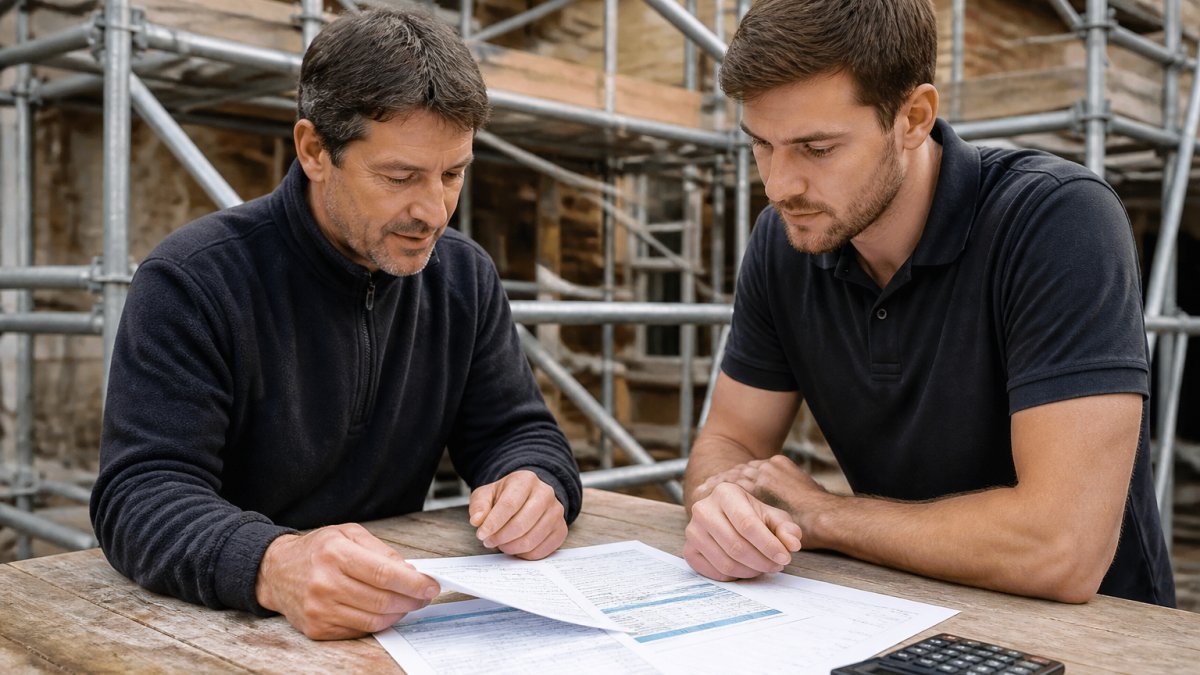
Ask for a written quote that lists the hire period, erection and dismantling, and licence costs separately. Written quotes from Ironclad Scaffolding are provided within 24 hours. Our cost of domestic scaffolding hire price guide breaks down what goes into a quote, and our advice on how to compare scaffolding quotes effectively helps you weigh up offers before you commit.
Frequently Asked Questions
Do you need scaffolding to paint a multi-storey house?
For anything above the ground floor, yes. A two-storey house facade puts the roofline well beyond safe ladder reach for sustained painting. Scaffolding for painting gives you a stable work platform, guardrails and a place to put paint tools. A single-storey wall or a small gable can sometimes be done from a properly footed ladder, but anything higher should be scaffolded.
Can a scaffold tower be used to paint a two-storey house?
A scaffold tower for painting a house is suitable for some two-storey facades, depending on the layout. The limits are footprint and repositioning: towers are narrow, so long walls mean moving and re-levelling the tower repeatedly. Towers also need firm, level ground and outriggers or stabilisers at height. For a full wrap around a house with gables and eaves, a frame scaffold is often a suitable option.
Do I need a licence if scaffolding is placed on a public pavement?
Yes. Any scaffold standing on or over the highway, including a pavement, needs a highway licence from the local council before it goes up. The application needs a plan of the layout, and the council can set conditions on lighting, signage and how long it stays. Ironclad Scaffolding handles highway licensing as part of its service. Ask about responsibilities and liability before you sign.
What should I check before using scaffolding for exterior painting?
Check four things. First, the scaffold is tagged or handed over as complete, with guardrails, toe boards and a safe ladder access point. Second, base plates sit on firm ground or sole boards, with no soft soil or drains underneath. Third, the structure is tied to the building as recommended. Fourth, a competent person has inspected it before first use and at regular intervals while it stays up. Never paint from a partially erected scaffold.